
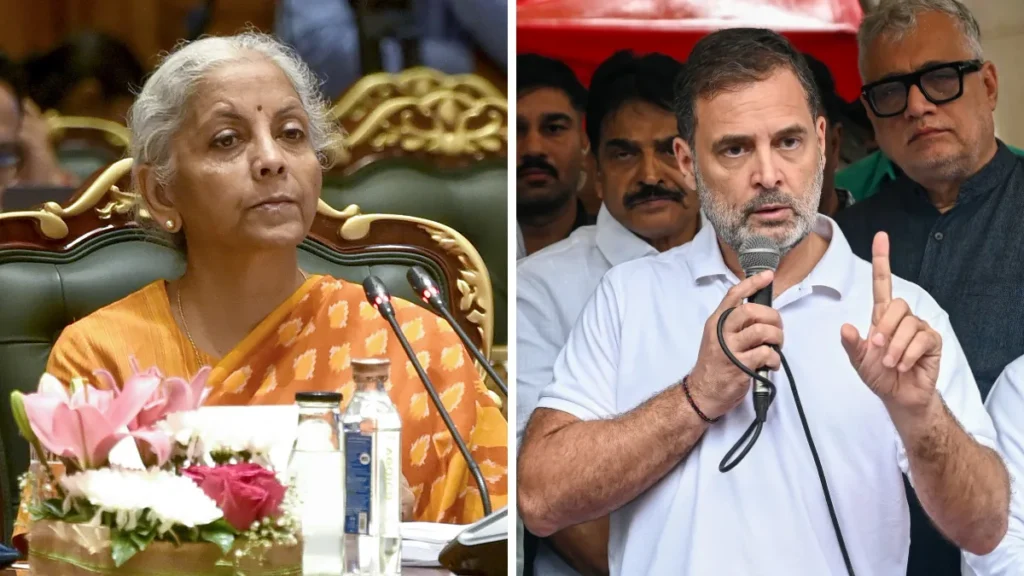
The proposed sale of the government’s majority stake in IDBI Bank has triggered a renewed political dispute between Congress leader Rahul Gandhi and Union Finance Minister Nirmala Sitharaman. The debate has also drawn attention to the concerns of bank employees and unions opposing the transaction.
Gandhi, the Leader of Opposition in the Lok Sabha, criticised the proposed sale and expressed support for employees resisting the move. He questioned why the government planned to sell the lender despite its reported profit of about Rs 9,000 crore in the previous financial year.
Gandhi Challenges the Government’s Rationale
Gandhi argued that the government should strengthen public institutions rather than sell them. He also said the Centre had not given a satisfactory explanation for the proposed transaction when he raised the matter in Parliament.
Sitharaman responded by accusing previous Congress-led governments of political interference in banks and of influencing lending decisions. She alleged that questionable lending practices during the UPA period contributed to IDBI Bank’s financial difficulties.
The Finance Minister said the NDA government had improved the bank’s position through professional management and recapitalisation exceeding Rs 25,000 crore. She defended the proposed transaction, saying the required procedures had been followed.
Cabinet Clears Proposed Transaction
According to the source report, the Union Cabinet approved the sale of a combined 60.72% stake in IDBI Bank to a subsidiary of Canada’s Fairfax Financial Holdings for approximately Rs 52,878 crore on October 14, 2026. The proposed stake comprises 30.48% held by the Central government and 30.24% owned by the Life Insurance Corporation of India.
The dispute has extended beyond the political exchange. Bank unions have called for a nationwide strike on November 2 and 3 to oppose the stake sale, while Gandhi has voiced support for the employees.
The proposed transaction, the unions’ objections and competing accounts of the bank’s financial history are likely to keep banking privatisation in the political spotlight.