
India has added three remarkable destinations to UNESCO’s World Heritage Tentative List, highlighting the country’s geological wonders and ancient cultural heritage. Announced on October 20, 2026, the additions include two sites in the Andaman and Nicobar Islands and one in Chhattisgarh. The move brings these places a step closer to possible World Heritage recognition, although they have not yet received the final designation.
1. Baratang’s Limestone Caves and Mud Volcanoes
Located in the Andaman and Nicobar Islands, the Karst-mud-volcano Complex of Baratang features limestone caves formed by the gradual dissolution of rock and unusual mud volcanoes. These formations release mud, water and gases rather than the molten lava associated with conventional volcanoes. The area is also significant for geological research and studies of historical monsoon patterns.
2. Andaman Subduction Volcanoes
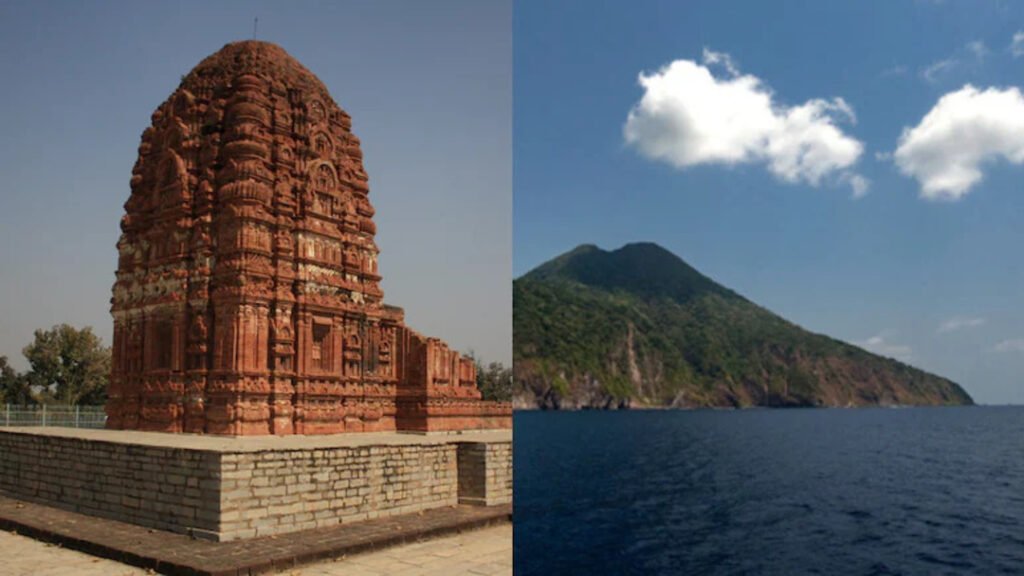
The second entry includes Barren Island and Narcondam Island, which showcase distinctive volcanic landscapes. Barren Island is home to India’s only confirmed active volcano, while forest-covered Narcondam is known for its endemic Narcondam hornbill. The islands are important for understanding volcanic processes and the development of wildlife in isolated environments
3. Sirpur Cultural and Archaeological Landscape
Situated along the Mahanadi River in Chhattisgarh’s Mahasamund district, Sirpur was an important settlement between the 5th and 12th centuries. Its archaeological remains include Hindu temples, Buddhist monasteries and Jain structures.
The historic Lakshmana Temple, known for its brick architecture and intricate carvings, is among the site’s prominent monuments. Sirpur offers insights into the region’s religious diversity, architecture and urban life in ancient India.
What Does UNESCO’s Tentative List Mean?
A place on UNESCO’s Tentative List is being considered as a potential candidate for World Heritage status. Inclusion is an important step in the nomination process, but it does not mean the site has already been recognised as a World Heritage Site.
The three new entries showcase India’s diverse natural and cultural heritage, from unusual geological formations in the islands to centuries-old archaeological remains on the mainland.