Scientists in Hyderabad have uncovered a previously unknown biological mechanism that helps a dangerous fungus transform into giant cells, giving it an advantage against the human immune system. The discovery could eventually open a new direction for developing treatments against serious fungal infections.
Researchers at the CSIR-Centre for Cellular and Molecular Biology (CCMB) have identified a connection between the fungus’s energy metabolism, calcium signalling and a cellular pathway called Calcineurin. Together, these processes help Cryptococcus neoformans produce unusually large cells known as Titan cells.
What are Titan cells?
Cryptococcus neoformans is a pathogenic fungus that can initially infect the lungs. In serious cases, it can spread through the bloodstream and reach the brain, where it can cause cryptococcal meningitis, a potentially life-threatening infection.
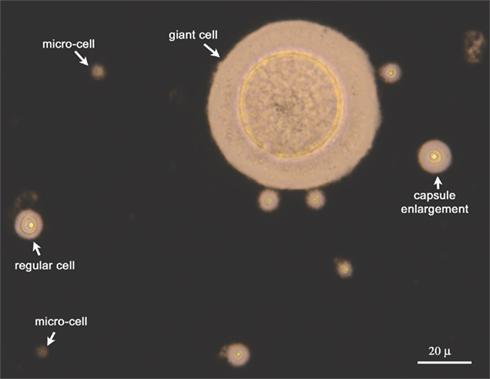
One of the fungus’s most remarkable survival strategies is its ability to change its size after entering the body.
Some fungal cells can grow dramatically larger than their normal form and become what scientists call Titan cells. Their enormous size makes it more difficult for immune cells to engulf and destroy them, allowing the fungus to persist inside its host.
Scientists solve a long-standing biological puzzle
Titan cells have been known to researchers for nearly two decades, but an important question remained unanswered: what tells the fungus to undergo this dramatic transformation?
The CCMB team, led by Dr Sriram Varahan, has now identified a biological connection that helps explain the process.
The researchers found that the fungus’s metabolism does more than provide energy. It also appears to influence the signalling machinery that controls Titan-cell formation.
How does the process work?
The researchers found that efficient glucose metabolism helps the fungal cell maintain the right balance of calcium inside the cell.
Calcium functions as an important molecular messenger. When its levels are properly controlled, it can activate the Calcineurin signalling pathway.
Calcineurin helps the fungus cope with stressful conditions inside the human body and contributes to the transformation of ordinary fungal cells into Titan cells.
In simple terms, the scientists have identified a chain of events:
Energy metabolism → calcium balance → Calcineurin signalling → Titan-cell formation
This connection gives researchers a much clearer picture of how the pathogen adapts to its environment and becomes harder for the immune system to eliminate.
Why the discovery matters
The study could change how scientists think about treating some fungal infections.
Traditional antifungal strategies generally focus on killing or stopping the growth of the fungus. The new findings suggest another possibility: interfering with the biological process that allows the fungus to become more difficult to attack.
If future research can identify safe ways to disrupt the metabolic and signalling network involved in Titan-cell formation, scientists may be able to weaken the pathogen and make it more vulnerable to the body’s immune response.
However, this does not mean that a new antifungal treatment is already available. More research will be required to determine whether the pathway can be safely targeted in patients.
From metabolism to survival strategy
Perhaps the most interesting aspect of the research is the role of metabolism.
Scientists traditionally understand metabolism as the system cells use to obtain and manage energy. The CCMB research suggests that, in this fungus, metabolism also plays a role in making critical decisions about survival and adaptation.
The fungus appears to use information about its internal energy state to activate signalling pathways that help it respond to the difficult environment inside the human body.
A possible new direction in antifungal research
The discovery comes at a time when fungal infections are receiving increasing scientific attention because some pathogens can be difficult to treat and may develop resistance to existing medicines.
Understanding how pathogens survive inside the body is therefore an important step toward finding new therapeutic strategies.
The CCMB team’s findings provide researchers with another potential target: the biological circuitry that helps the fungus transform itself rather than simply the fungus itself.
What comes next?
The next stage will be determining whether components of this pathway can actually be targeted without harming human cells.
Researchers will need to establish which molecules are most suitable for intervention, whether blocking Titan-cell formation reduces infection, and whether such approaches can eventually work alongside existing antifungal medicines.
For now, the Hyderabad study provides an important piece of the puzzle. By revealing how energy metabolism, calcium signalling and Calcineurin work together to promote Titan-cell formation, scientists have gained a better understanding of one of the fungus’s most powerful survival strategies.
The discovery may ultimately help researchers move toward a different kind of antifungal treatment—one designed not only to attack the pathogen, but also to disable the biological mechanisms that make it harder to defeat.