
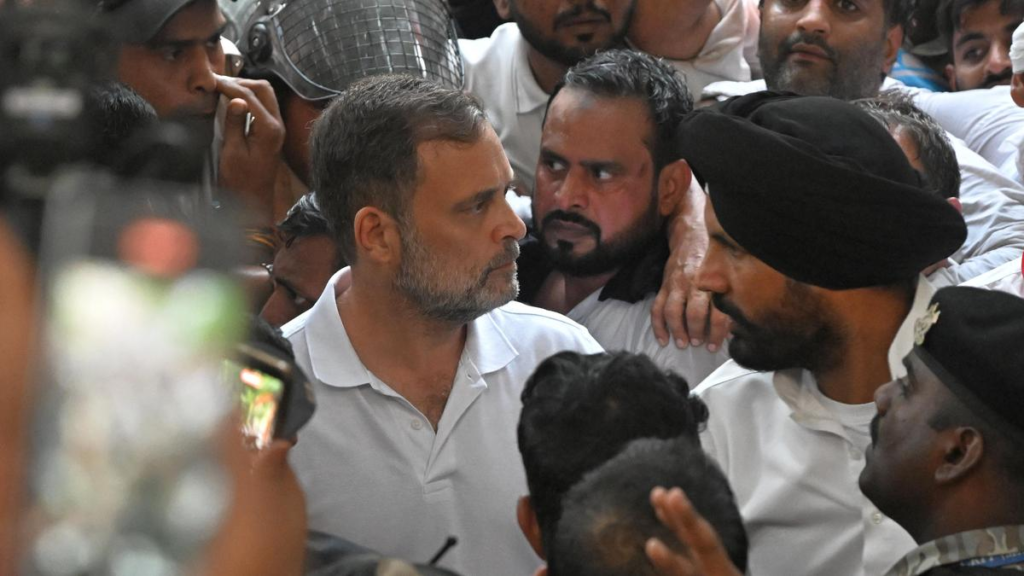
The political controversy surrounding Chief Election Commissioner Gyanesh Kumar has intensified as opposition parties demand his resignation over alleged irregularities in the revision of electoral rolls. The INDIA bloc has continued its protests in Delhi, accusing the Election Commission of failing to ensure transparency in the electoral process.
The dispute has triggered political confrontations, police restrictions and renewed debate over voter rights and the independence of India’s election machinery.
1. Opposition Demands CEC’s Resignation
Congress and other INDIA bloc parties have stepped up their campaign against Gyanesh Kumar, alleging that the electoral roll revision process could unfairly affect eligible voters. Opposition leaders have called for his resignation and demanded greater accountability from the Election Commission.
The allegations remain contested, with the Election Commission and the BJP rejecting claims of political bias.
2. Protests and Detentions in Delhi
Opposition demonstrations in the national capital have faced restrictions from Delhi Police. Several leaders and party workers, including Rahul Gandhi and Priyanka Gandhi Vadra, were detained during protest-related confrontations earlier in the week.
Police cited restrictions on marches and public gatherings in parts of central Delhi. The developments have intensified the dispute between opposition parties and the authorities over the right to protest.
3. INDIA Bloc Takes Its Campaign to Rajghat
After facing restrictions around Jantar Mantar and the Election Commission’s headquarters, opposition leaders shifted their demonstration to Rajghat on October 8. The gathering allowed them to continue their protest through a prayer-based programme.
The opposition has also discussed further demonstrations and wider mobilisation, seeking to keep electoral transparency at the centre of the political debate.
4. Special Intensive Revision Remains at the Centre
The Special Intensive Revision (SIR) of electoral rolls has become the principal issue behind the confrontation. Opposition parties have raised concerns about voter deletions and the possibility of eligible citizens losing their voting rights.
Authorities maintain that electoral roll revisions are intended to improve accuracy by identifying duplicate, ineligible and outdated entries. The debate centres on whether the process includes sufficient safeguards, verification and opportunities for affected voters to appeal.
5. Cockroach Janta Party Plans October 10 Protest
The Cockroach Janta Party (CJP), along with student groups, has announced a protest at Delhi’s Jantar Mantar for October 10, demanding action against the Chief Election Commissioner and changes to the electoral process.
The proposed demonstration has prompted heightened security preparations. Authorities have indicated that public-order restrictions will affect how gatherings can take place, while organisers have maintained their demand for the right to peaceful protest.
6. Electoral Transparency Becomes a Wider Political Issue
The controversy has expanded beyond Delhi, with demonstrations and criticism emerging in other parts of the country. Opposition parties argue that transparent voter registration is essential to maintaining public confidence in elections.
The government and election authorities, however, reject allegations that the revision exercise is politically motivated. The competing claims have placed renewed attention on the procedures used to maintain voter lists.
7. What Happens Next?
The coming days could bring further political mobilisation as opposition parties press their demands and the CJP prepares for its planned demonstration. The central questions remain how electoral roll changes are verified, how eligible voters can challenge deletions, and how the Election Commission responds to concerns over transparency.
The controversy is likely to remain a significant political issue as parties debate electoral accountability, institutional independence and the protection of voting rights.