
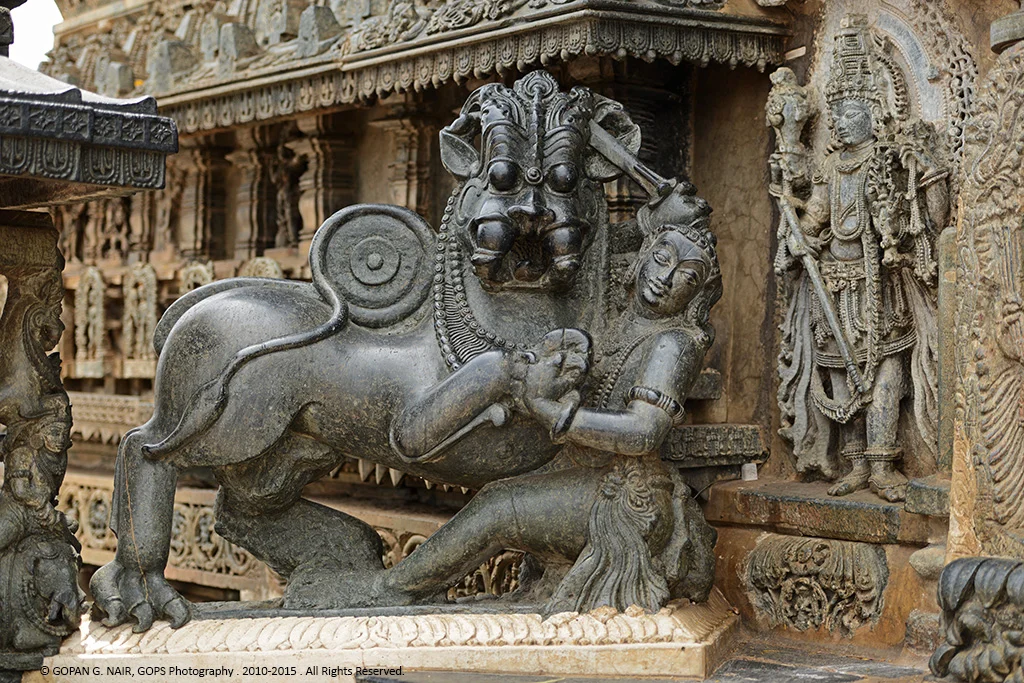
The Chennakeshava Temple at Belur, Karnataka, is famous for its extraordinary stone carvings, intricate pillars and beautifully detailed sculptures. Built during the Hoysala period, the temple stands as one of the finest examples of medieval South Indian temple architecture.
Among its most celebrated artistic features are the Madanikas, also known as bracket figures. These sculptures depict women in elegant poses, including dancers and musicians, and are known for their remarkable attention to jewellery, clothing, hairstyles, gestures and body movement.
UNESCO’s documentation on the Sacred Ensembles of the Hoysalas notes that the Chennakeshava Temple has 48 Madanika or bracket figures, with four located inside and the remaining figures positioned on the outer walls. UNESCO describes these sculptures as exceptionally elegant and highly polished works carved in the round.
The artistic detail is particularly striking. Hoysala sculptors carved tiny elements such as ornaments, beads, hair and facial features into the stone. UNESCO notes that Hoysala architecture is distinguished by its highly intricate stonework, deep undercutting and extremely detailed representations of figures, plants and decorative motifs.
The temple dates to the 12th century, with UNESCO records noting the continuity of worship at Chennakeshava Temple since its inception in 1117 CE. The Hoysala monuments at Belur, Halebidu and Somanathapura were collectively inscribed on the UNESCO World Heritage List in 2023 as the Sacred Ensembles of the Hoysalas.
The Madanikas are also significant from the perspective of dance and cultural history. UNESCO’s documentation states that many of the figures display dance-like poses and gestures associated with conventions described in the Natyashastra, while several figures are shown holding musical instruments.
The sense of movement in the sculptures is one of the features that makes Hoysala art particularly remarkable. Figures appear to be dancing, playing instruments or interacting with their surroundings. Sculptors paid close attention to anatomy, posture, ornaments and flowing garments, creating an impression of movement despite working with hard stone.The temple’s interiors are equally impressive, featuring highly polished pillars and elaborate ceilings. UNESCO describes the Hoysala artistic style as being characterised by extensive ornamentation, high-relief carving and intricate details across the architectural surface.
The social-media image describes the Madanika sculptures as “900-year-old sculptures.” Since the Chennakeshava Temple dates to the early 12th century, the description broadly refers to the age of the Hoysala-era artwork. However, individual sculptures and additions to the temple complex should not automatically be assigned exactly the same age without specific archaeological dating.
Today, the Madanikas remain among the most recognisable examples of Hoysala stone craftsmanship, offering visitors a remarkable glimpse into the artistic traditions of medieval Karnataka.