
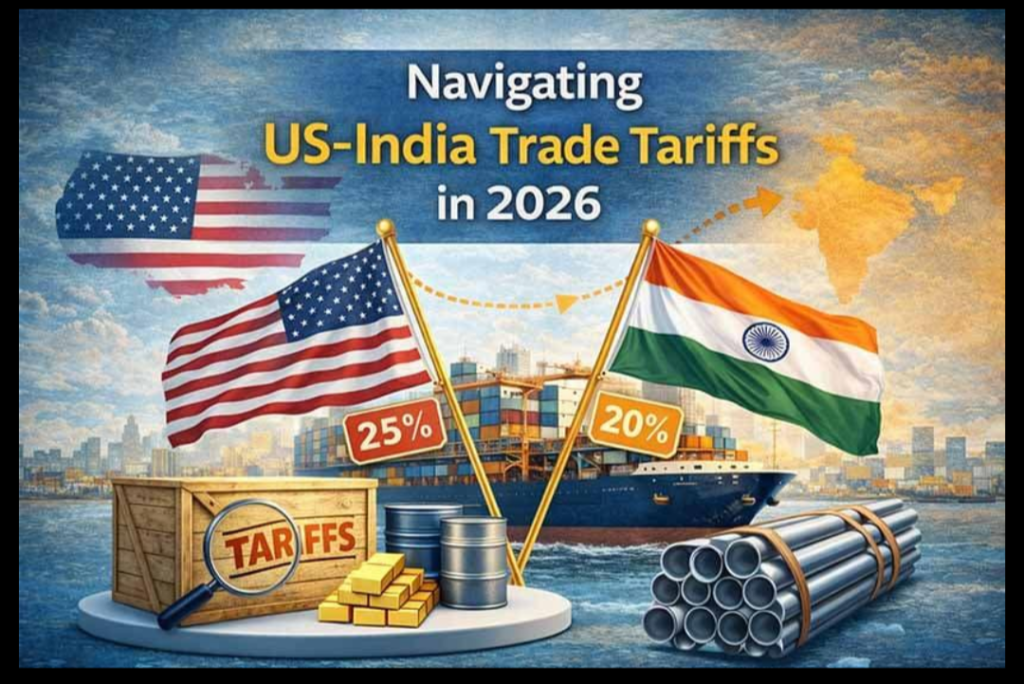
The US House of Representatives has advanced a major sanctions bill that could authorize President Donald Trump to impose tariffs of up to 100% on goods from India and other countries that continue purchasing Russian oil and gas.
On Tuesday (September 15, 2026), the House cleared a key procedural hurdle by a narrow 214-211 vote. Two Democrats joined Republicans to support the resolution advancing the Lindsey O. Graham Sanctioning Russia and Iran Act of 2026, along with several other measures. A final vote on the bill itself is expected soon, potentially as early as Wednesday.
The legislation, which passed the Senate earlier with strong bipartisan support (86-11), targets Russia’s energy sector, leadership, and “shadow fleet” of vessels used to evade existing sanctions. It aims to cut revenue funding Russia’s war in Ukraine. Critically, it empowers the US President to levy additional tariffs of up to 100% on imports from the top buyers of Russian crude oil and natural gas.
India, one of the largest purchasers of discounted Russian oil since the Ukraine conflict began, is among the countries that could be affected. China, Azerbaijan, Hungary, and Slovakia are also frequently cited in this category. An amendment proposed by Democratic Congressman Steny Hoyer seeks to explicitly name India, China, Türkiye, Azerbaijan, Hungary, Slovakia, the UAE, Singapore, Kazakhstan, and the Kyrgyz Republic as eligible for these duties.
Important clarifications: The bill does not automatically impose a 100% tariff. It grants discretionary authority to the President (and the US Trade Representative), who can set the rate anywhere from above zero up to 100%, or waive it entirely if deemed in the US national interest. The list of affected countries would be reviewed every 180 days based on purchasing behavior. Tariffs, if applied, would cover goods from the targeted country entering the United States and would be in addition to existing duties.
The House has limited working days before an early recess ahead of the November midterm elections. If the House passes the Senate version without major changes, the bill would go to President Trump for signature. Trump has indicated support for the measure.
For India, which relies heavily on Russian crude (often accounting for a significant share of its oil imports) to manage energy costs, the development adds uncertainty to bilateral trade relations with the US. Indian officials have previously stated they are closely monitoring such legislative moves. The proposal comes amid ongoing India-US trade discussions and broader geopolitical pressures in the energy market.
The bill still faces further legislative steps before becoming law, and any actual imposition of tariffs would depend on presidential decisions and implementation details.