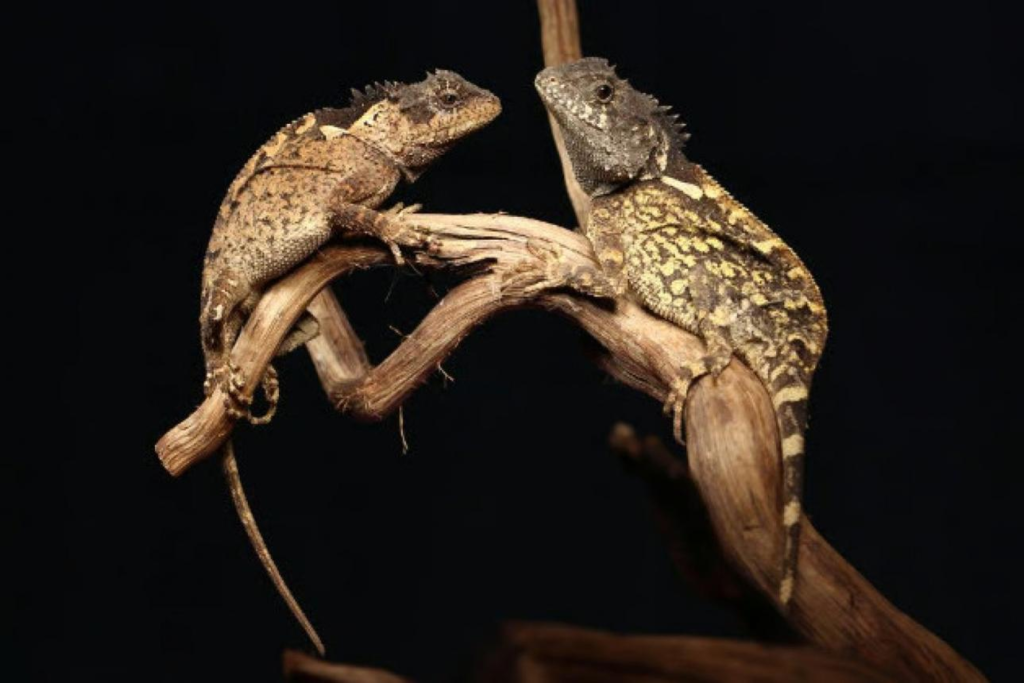
A small mountain lizard discovered in the forests of western Thailand has given scientists an unusual opportunity to connect modern biodiversity research with popular culture. Researchers have identified the reptile as a previously unknown species and named it Acanthosaura syrax, after Syrax, the dragon associated with Queen Rhaenyra Targaryen in House of the Dragon.
But behind the memorable name is a serious scientific discovery. The reptile belongs to the mountain horned dragon group, a family of spiny lizards known for the raised crests running along their necks and backs.
A Hidden Species in Thailand’s Mountain Forests
Researchers found the new lizard in an evergreen forest within Mae Wong National Park, in western Thailand. The animals were recorded at elevations above 1,300 metres, and researchers have not yet found the species outside this high-altitude environment.
The discovery increases the number of recognized species in the Acanthosaura genus to 23, highlighting how much biodiversity can remain hidden within specialized mountain habitats.
Why Scientists Chose the Name Syrax
The connection to the fictional dragon was carefully chosen rather than simply being a pop-culture reference.
The newly described lizard has yellowish-green colouring, is relatively small compared with other members of its genus and produces comparatively large egg clutches. These characteristics reminded researchers of Syrax, the fictional dragon’s appearance and traits.
The scientists have proposed “Syrax mountain horned dragon” as the species’ English common name.
DNA Helped Confirm It Was a New Species
The animal’s unusual appearance alone was not enough to establish it as a new species.
Researchers combined physical observations with genetic analysis. DNA data from two genes, ND2 and COI, showed that the lizard is genetically distinct from its closest relatives. This evidence, together with differences in its physical characteristics, supported its classification as a separate species.
The lizard also has distinctive features in its body structure, including unusually small crest scales along the neck and back and markings that distinguish it from related species.
A Discovery With a Conservation Message
The most important part of the discovery may be where the lizard lives.
Because Acanthosaura syrax has so far been found only within a narrow high-elevation forest environment, its future could depend heavily on the protection of that habitat. Researchers believe the species could become a flagship for conservation in the region, helping draw attention to other rare animals that share the same mountain forests.
Protecting these forests is therefore not only about saving one newly identified lizard. High-elevation ecosystems can support many species with highly restricted ranges, making habitat conservation particularly important.
When Pop Culture Meets Biodiversity
Naming a species after a fictional dragon may attract attention from audiences who would not normally follow taxonomy or herpetology. That attention can also help scientists communicate why discovering and protecting lesser-known species matters.
The Acanthosaura syrax discovery is a reminder that new species are still being identified in places that scientists have studied for years. It also shows how a seemingly small animal can reveal a much larger story about evolution, genetics and the importance of protecting Earth’s remaining wild habitats.
For now, Thailand’s newly named “Syrax mountain horned dragon” is a real animal with a fantasy-inspired name—but its scientific significance is very real.