
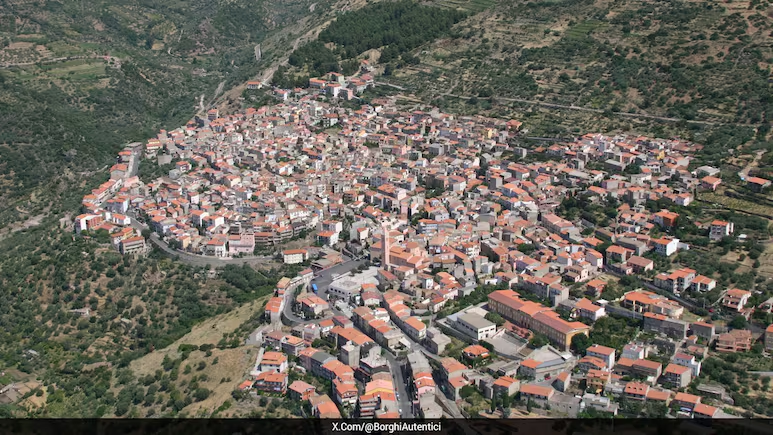
A small village in Sardinia, Italy, has attracted scientific attention for an unusual demographic pattern: women living into very old age at notably high rates. Researchers are examining Bolotana to understand what makes its older population stand out and whether it could become another recognised longevity hotspot.
1. Bolotana Draws Attention for Exceptional Longevity
Located in the mountainous region of Sardinia, Bolotana has emerged as a candidate for a new “Blue Zone” a place associated with unusually high longevity. Researchers studied the village’s population records to investigate how its residents survive into advanced age.
2. Women Show Particularly High Survival Rates
The research, published in Frontiers in Aging in October 2026, found a striking pattern among women aged 70 and older. During 2021–2025, women in Bolotana had an estimated remaining life expectancy of 20.85 years at age 70.
The study also estimated that 13.83% of women who reached 70 would survive to age 100 under the period’s mortality conditions. The corresponding estimate for women across Italy was 3.54%.
3. Historical Records Helped Verify Ages
To assess longevity reliably, researchers examined municipal civil records alongside historical church registers. These documents helped validate birth and death information, reducing the risk of incorrectly recorded ages among people who reached 100.
The team used these records to build life tables and compare survival patterns with those of nearby regions and Italy as a whole.
4. Could Lifestyle Play a Role?
Diet, everyday physical activity, family relationships, social connections and genetic factors are often discussed in longevity research. These may be worth investigating in Bolotana, but the current study did not establish that any particular habit or biological factor explains the village’s results.
Researchers will need more detailed studies to identify which influences, if any, contribute to its distinctive survival pattern.
5. Why the Blue Zone Label Is Not Yet Confirmed
Although Bolotana’s recent figures are notable, the study found that its estimated longevity advantage varied across observation periods. A comparison using data from 2015–2019 showed a less pronounced survival profile than the more recent analysis.
The researchers therefore describe Bolotana as a candidate longevity Blue Zone rather than a confirmed new member of the group.
6. What Scientists Hope to Learn
Further research could help clarify whether Bolotana’s pattern continues over time and how its experience compares with that of other long-lived communities. Longer observation periods and studies examining individual lifestyles, social conditions and biological factors will be important.
7. What This Means for Healthy Ageing
Bolotana offers researchers an intriguing opportunity to investigate how people reach advanced ages. However, its findings do not prove that moving to Sardinia or following a particular local habit will extend a person’s life.
For now, the village provides a promising starting point for understanding longevity particularly the factors that may shape women’s survival into very old age.