
New Research Reopens the Nazi Nuclear Question
A new study has reassessed how close Nazi Germany came to developing a working nuclear reactor during World War II. Researchers examined surviving uranium, historical documents and technical evidence from Germany’s final reactor experiment, known as the B8 pile.
Werner Heisenberg’s Claim Reconsidered
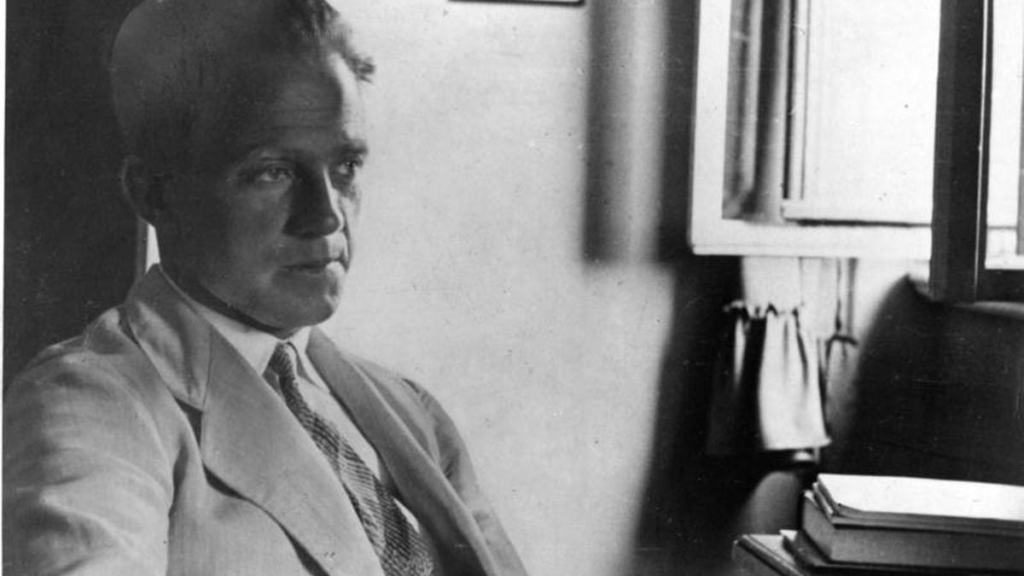
The B8 reactor was built in April 1945 under the leadership of physicist Werner Heisenberg. After the war, Heisenberg suggested that the experiment had been only slightly short of achieving a self-sustaining nuclear reaction.
The new analysis challenges that interpretation, finding that the shortages were much more substantial than Heisenberg indicated.
The B8 Reactor Needed Far More Uranium
Researchers created a detailed model of the reactor using physical evidence and records from the period. They found that the B8 would have required about twice as much uranium as it actually contained to reach criticality.
The reactor as built had an estimated effective multiplication factor of about 0.94, below the level needed for a sustained chain reaction.
Heavy Water Was Another Major Problem
The German design also depended on heavy water to slow neutrons and support the nuclear chain reaction. Supplies were extremely limited because Germany relied on production from the Norsk Hydro facility at Vemork in Norway.
The researchers estimate that the B8 would have needed about 2.2 times more heavy water than it used. This was more than Germany could realistically obtain during the war.
Could Graphite Have Saved the Project?
Another possibility was using graphite instead of heavy water as a neutron moderator. But the study found that the graphite available to German scientists contained enough boron impurities to prevent a suitable reactor from reaching criticality.
This means Germany faced serious material limitations whichever reactor route it pursued.
What Nuclear Archaeology Reveals
The research used what scientists describe as a form of nuclear archaeology—combining surviving physical materials with historical records and modern nuclear modelling.
The findings suggest that Nazi Germany’s nuclear programme was not on the verge of producing a working reactor when the war ended. Instead, its final design faced fundamental shortages that could not easily have been solved with the resources available at the time.
A New Picture of the Wartime Nuclear Race
The study does not diminish the importance of Germany’s early nuclear research, particularly after nuclear fission was discovered in 1938. But it provides stronger evidence that the German programme remained far behind the industrial scale eventually achieved by the Manhattan Project.
The B8 reactor’s surviving materials are now helping scientists reconstruct that history with greater precision and challenge long-standing assumptions about how close Nazi Germany really came to a nuclear breakthrough.