
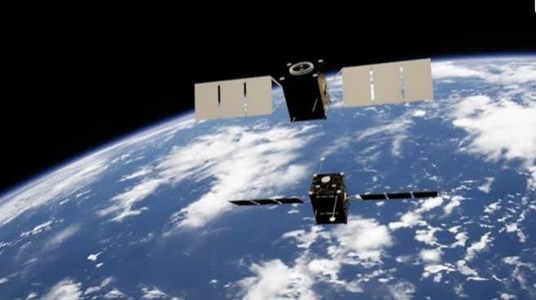
Satellites support communication, navigation, weather monitoring and scientific research, but the growing amount of material in orbit creates a serious collision risk. Fragments from old spacecraft and rocket components can travel at several kilometres per second, making even small objects dangerous.
Researchers are therefore looking for ways to protect spacecraft without adding large amounts of weight.
A Different Kind of Space Armour
Modern shielding can use combinations of composite materials, high-strength fabrics and lightweight foams. Kevlar and ceramic fibres are attractive because they can provide strong protection without requiring thick metal layers.
Some designs use several protective layers separated by gaps. When debris hits the outside layer, it can break apart before reaching the main spacecraft wall. Spreading the impact over a larger area can reduce the damage.
Why Weight Matters
A satellite cannot simply carry unlimited armour. Every extra kilogram affects launch requirements, cost and mission performance. Engineers therefore have to balance protection with mass.
New manufacturing techniques could help. 3D-printed structures can create complex internal patterns designed to manage impact energy efficiently. Metal foams are also being investigated because their internal structure can absorb energy while remaining relatively light.
Protecting a Crowded Orbit
As more spacecraft operate in orbit, better protection could make missions more resilient. Future satellite armour may look less like a heavy shield and more like a carefully engineered combination of thin composites, fabrics, ceramics, foams and layered structures.