A new development in cancer research is giving scientists fresh evidence that vaccines may one day be designed specifically around an individual patient’s tumour. A personalized mRNA vaccine developed for melanoma has shown promising results in a Phase III clinical trial, with the treatment reducing the risk of the cancer returning after treatment.
The findings, reported by Nature on August 20, 2026, mark an important step for the emerging field of personalized cancer vaccines. The vaccine uses mRNA technology—the same broad technology platform that helped produce COVID-19 vaccines—but applies it to a very different challenge: teaching the immune system to recognize and attack cancer cells.
How a Personalized Cancer Vaccine Works
Traditional vaccines are generally designed to protect people against infectious organisms such as viruses or bacteria. Cancer vaccines take a different approach.
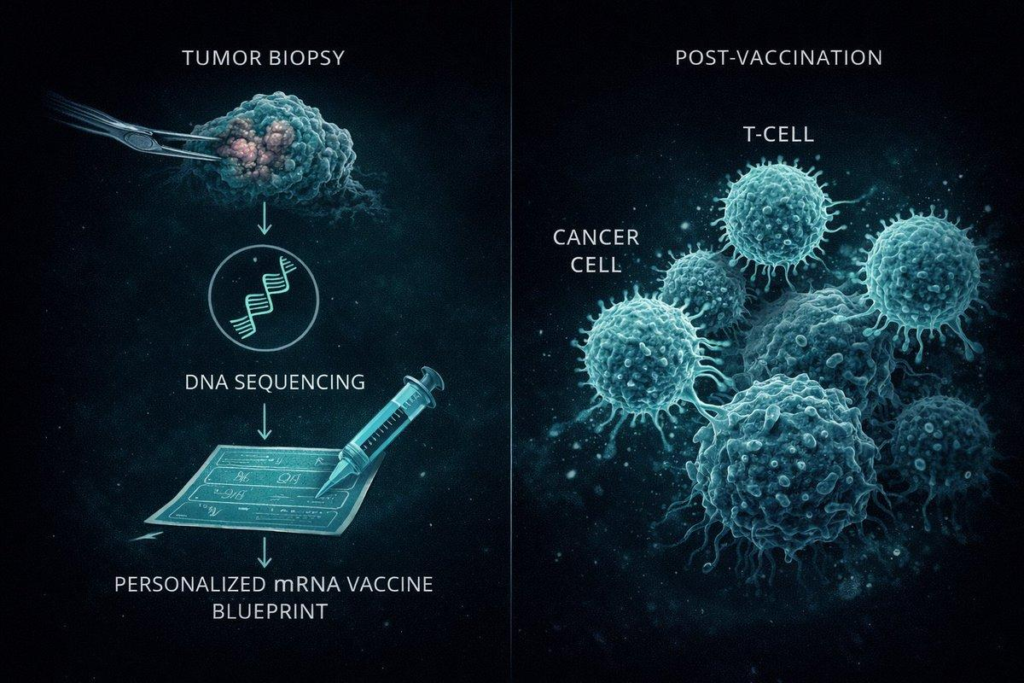
Tumours can contain abnormal proteins or molecular markers that distinguish cancer cells from healthy tissue. A personalized vaccine can be designed using information from a patient’s own tumour, with the goal of helping the immune system identify those cancer-specific targets.
The mRNA component provides instructions that allow cells to produce selected tumour-related proteins. The immune system can then be trained to recognize those targets and mount a response against cells carrying them.
Why the Melanoma Results Matter
Melanoma can return even after the original tumour has been removed. This makes preventing recurrence an important goal of treatment.
The Phase III results are significant because they provide late-stage clinical evidence that an mRNA-based cancer treatment can potentially reduce the chance of melanoma returning. Nature describes this as the first mRNA-based cancer treatment to report success in a late-stage Phase III trial.
That does not mean the vaccine is a universal cancer cure. The results relate specifically to melanoma, and regulatory review and further evidence remain important before such an approach can become widely available.
Moving Toward More Individualized Cancer Treatment
One of the most interesting aspects of the research is its personalized nature.
Instead of developing exactly the same vaccine for every patient, scientists can potentially use genetic and molecular information from an individual’s tumour to identify targets that are more relevant to that particular cancer.
This could eventually make cancer treatment increasingly tailored to the biology of each patient’s disease.
Could the Technology Work Against Other Cancers?
Researchers are already exploring whether similar approaches could be applied beyond melanoma. The underlying concept—using a patient’s tumour information to design an immune response—could potentially be investigated for other types of cancer.
However, different cancers have different biological characteristics, so success in melanoma does not automatically guarantee the same results elsewhere.
The field will therefore require additional clinical trials to determine which cancers are most suitable for personalized mRNA vaccines and how these treatments should be combined with existing therapies.
From Pandemic Technology to Cancer Research
The development also demonstrates how a technology can move from one scientific challenge to another.
mRNA technology became widely known through COVID-19 vaccines, but researchers have been investigating its potential for many other applications. Cancer immunotherapy is one of the areas attracting significant interest because mRNA can be rapidly designed and adapted to carry specific biological instructions.
The latest melanoma findings suggest that this platform could become an important part of the next generation of cancer research.
A Potential New Direction for Precision Oncology
Personalized cancer vaccines remain an emerging technology, but the latest results represent an important milestone.
If future studies confirm the findings and regulators approve the treatment, cancer care could increasingly move toward therapies designed around the unique molecular characteristics of an individual’s tumour.
For now, the melanoma results offer a promising glimpse of how vaccine technology and precision medicine could come together to create more targeted approaches to cancer treatment.