
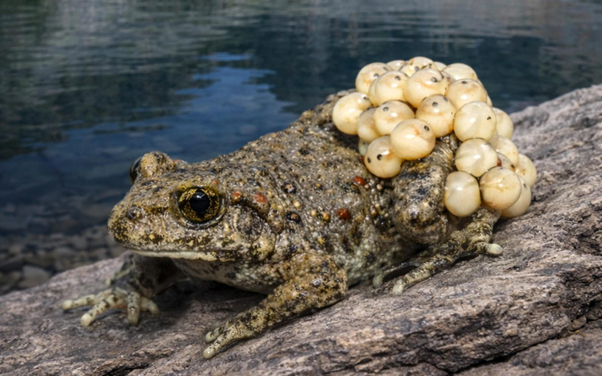
A fungal disease has caused major declines in amphibian populations, but some groups of common midwife toads have shown an unusual ability to recover. Scientists have found evidence that the timing of immune development may be part of the explanation.
The disease is caused by Batrachochytrium dendrobatidis, or Bd, which produces chytridiomycosis. The fungus affects amphibian skin and can interfere with the animals’ balance of water and essential minerals.
A Study Across Four Lakes
Researchers studied common midwife toads living around four lakes in the Pyrenees of France and Spain. Bd was still present at all the locations. Three populations had recovered after major declines, while another continued to experience heavy deaths.
The key difference appeared during the animals’ early development.
Earlier Immune Defences
Recovering populations had more mature skin-based immune defences while the animals were still tadpoles. As a result, they entered adulthood with stronger protection already in place.
Scientists also identified 1,152 antimicrobial peptides released from the animals’ skin. Only seven of these had previously been known.
A Possible Clue for Medicine
Researchers are now investigating how these peptides work and which have strong antimicrobial properties. They may eventually provide useful clues for research into antimicrobial resistance, although that possibility remains speculative and requires much more study.
Why Timing Matters
The study suggests that surviving disease may depend not only on having an immune response, but also on developing that response at the right stage of life. Understanding this process could help scientists protect amphibian populations facing chytrid fungus.