
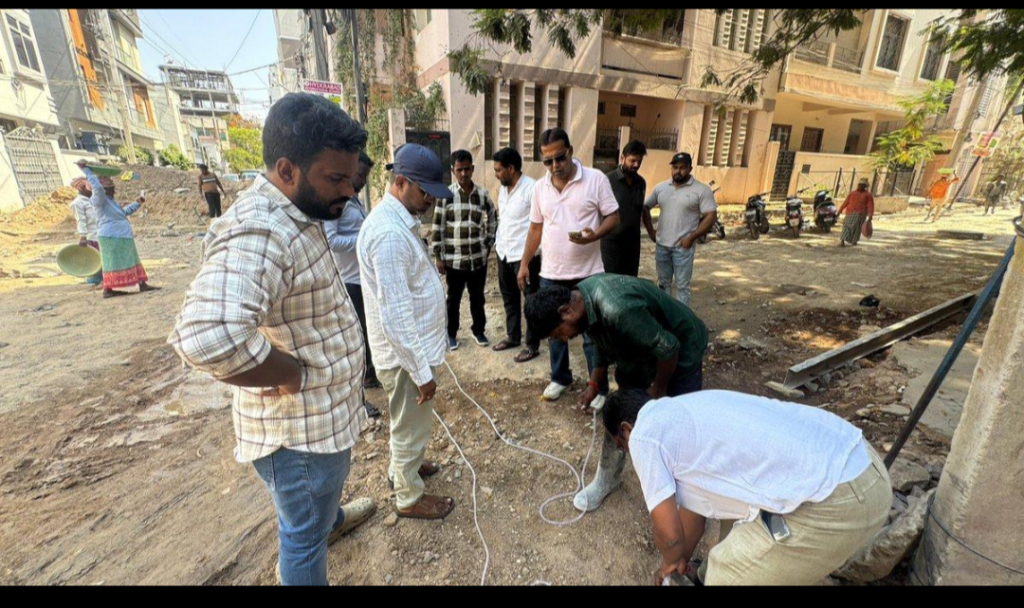
Hyderabad, September 15, 2026: The Telangana government has approved a major infrastructure project to convert overhead electricity lines into an underground power cable network across four key operational circles of Hyderabad at an estimated cost of ₹4,051 crore.
The project, proposed by the Telangana Southern Power Distribution Company Limited (TGSPDCL), covers the Metro Zone comprising Banjara Hills Circle, Secunderabad Circle, Hyderabad Central Circle and Hyderabad South Circle.
Project Objectives
The initiative aims to:
Improve the quality and reliability of power supply
Reduce power outages, especially during rains and storms
Minimise accidents caused by snapping of overhead cables
Lower long-term maintenance costs
Enhance the city’s urban aesthetics by removing the clutter of overhead wires
Support industrial growth and attract investments in the metro area
According to the government order (G.O. Ms. No. 43), the project involves undergrounding of 33 kV, 11 kV and low-tension (LT) overhead lines on main roads. In narrow lanes, LT lines will be replaced with safer Aerial Bunched (AB) cables. Ring Main Units (RMUs) will be installed for better network automation, and optical fibre cables will also be laid.
Funding and Implementation
The cost will be met through TGSPDCL’s internal funds or borrowings. The utility has been directed to ensure participation of telecom and internet service providers, as well as T-Fiber, on a cost-sharing basis for the underground infrastructure.
The larger vision includes expanding underground cabling across Greater Hyderabad over the coming years, with earlier estimates for the full city ranging higher. However, the current administrative approval focuses on the priority Metro Zone as Phase-1.
Chief Minister A. Revanth Reddy has previously stressed the need for faster execution of underground cabling to make Hyderabad a more resilient and modern city.
Once implemented, the project is expected to significantly reduce rain-related power disruptions and improve overall electricity distribution efficiency in the core urban areas.
Officials from TGSPDCL are expected to move forward with detailed execution planning, multi-agency coordination (GHMC, traffic, water board, etc.), and tender processes in the coming months.