
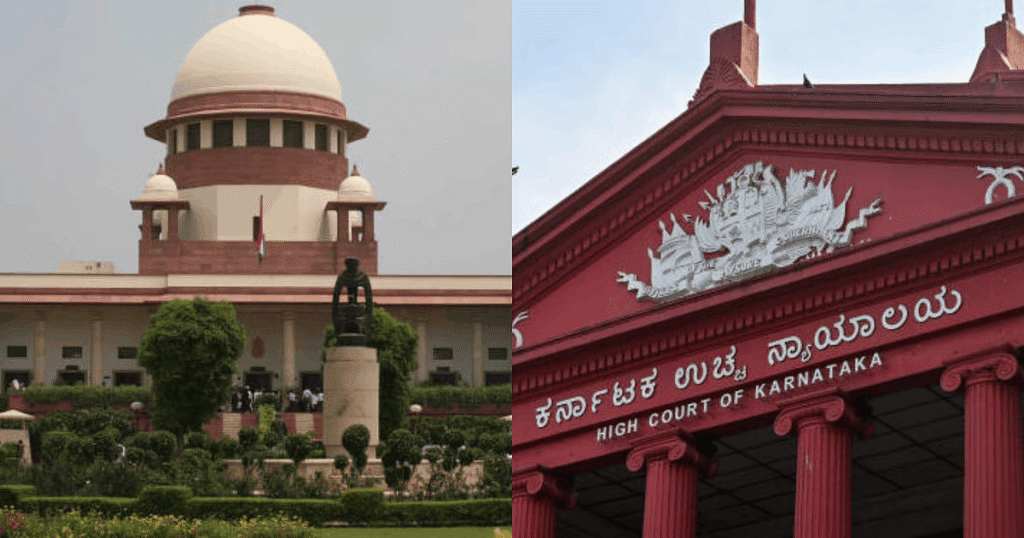
The Karnataka Congress government has approached the Supreme Court challenging a High Court judgment that struck down the state’s enhanced reservation quotas for Scheduled Castes (SC) and Scheduled Tribes (ST).
The appeal seeks to protect the reservation changes introduced through legislation in 2022. The dispute has brought the state’s social justice policy back into focus, with the future of educational and government employment opportunities linked to the legal outcome.
Karnataka Seeks Restoration of Higher Reservation Quotas
The state government had increased reservations for Scheduled Castes from 15 per cent to 17 per cent and for Scheduled Tribes from 3 per cent to 7 per cent.
The changes were introduced through the Karnataka Scheduled Castes and Scheduled Tribes Reservation Act, 2022, covering seats in educational institutions and appointments in state services.
The Congress government argues that the enhanced quotas are important for improving access to education and employment among communities that have experienced historical disadvantages.
High Court Judgment Creates Legal Uncertainty
The Karnataka High Court struck down the legislation, citing concerns that the revised reservation exceeded the 50 per cent ceiling established by the Supreme Court.
The judgment also questioned whether the state had followed the necessary consultation process with the National Commission for Scheduled Castes and the National Commission for Scheduled Tribes.
The ruling has created uncertainty over the implementation of the revised quotas, prompting the government to seek relief from the Supreme Court.
State Renews Demand for Ninth Schedule Protection
Alongside its appeal, Karnataka has again asked the Union government to include the relevant 2022 legislation in the Constitution’s Ninth Schedule.
The state believes such inclusion could provide additional protection to the reservation law against legal challenges. However, Ninth Schedule protection is not absolute, as laws placed there can still face constitutional judicial review.
The Karnataka Legislative Assembly had previously adopted a resolution on December 18, 2025, urging the Centre to take steps towards inclusion.
Recruitment and Backlog Vacancies Remain Important Issues
The government has continued addressing vacancies and recruitment matters while the legal dispute remains unresolved.
In February 2026, it approved the filling of 56,432 vacant posts. It also decided to provide an additional six per cent reservation for SC and ST candidates in backlog vacancies until the legal proceedings reach a final outcome.
The government has additionally highlighted internal reservation within Scheduled Castes, arguing that benefits should reach more disadvantaged groups within the community.
Congress Criticises Previous BJP Administration
The Congress government has accused the previous BJP administration of failing to secure the requested constitutional protection for the enhanced reservation policy.
According to the state government’s account, the earlier administration introduced an ordinance and later enacted the legislation before the 2023 Assembly elections without obtaining the requested Ninth Schedule protection.
Congress has also questioned the Union government’s response to Karnataka’s repeated requests.
Supreme Court Decision Will Shape the Policy’s Future
The Supreme Court’s consideration of Karnataka’s appeal will be important in determining whether the enhanced reservation provisions can be restored.
The outcome could affect government recruitment, educational admissions and the state’s broader approach to reservation policy. For the Congress government, the case is also a major test of its stated commitment to social justice and opportunities for disadvantaged communities.