
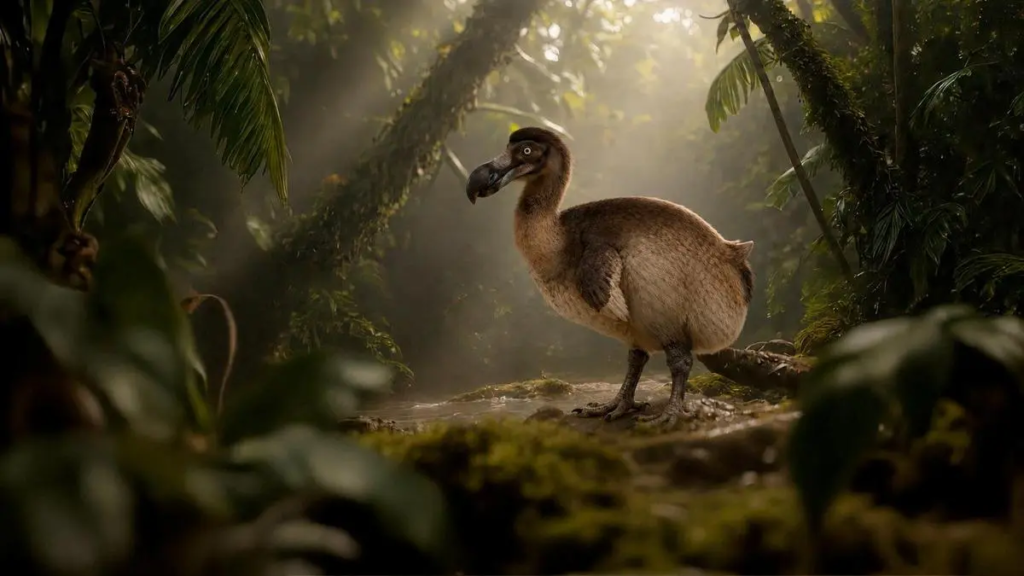
The dodo, a flightless bird that disappeared centuries ago, may be one step closer to a possible revival. US biotechnology company Colossal Biosciences says it has developed an artificial intelligence platform that can identify genetic changes potentially responsible for the bird’s distinctive appearance.
The development represents progress in the emerging field of de-extinction, which explores whether genetic technologies can recreate important traits of extinct animals. However, identifying possible genetic targets is only an early step, and a living dodo has not been brought back.
1. AI Platform Targets the Dodo’s Distinctive Features
Colossal Biosciences has introduced an AI platform called GenoMorph to help researchers identify genetic regions linked to the dodo’s characteristic skull and beak. The system is designed to narrow down possible gene-editing targets when scientists have limited ancient DNA to study.
The company says the platform identified approximately 2,300 candidate targets associated with the bird’s craniofacial features. These are candidates for further investigation, not confirmed genetic changes that would independently recreate a dodo.
2. Why the Dodo’s DNA Is Difficult to Study
The dodo became extinct after human arrival on Mauritius in the Indian Ocean, with hunting and introduced animals contributing to its disappearance. Because it has been extinct for centuries, researchers must rely on preserved remains to reconstruct its genetic information.
Ancient DNA is often fragmented, making it difficult to assemble a complete genome and distinguish the genetic variations responsible for particular physical traits. The limited number of available dodo genomes makes this challenge especially difficult.
3. How AI Learns From Living Birds
To overcome the shortage of dodo genetic data, GenoMorph compares information from living bird species. According to Colossal, the platform combines genetic information, developmental biology and measurements of bird skulls to predict which regulatory DNA regions may influence beak size and facial structure.
Regulatory DNA acts like a set of genetic switches, influencing when and where genes are active. By studying similarities and differences across living birds, researchers hope to identify the changes that may have contributed to the dodo’s unusual appearance.
The predicted targets must still be tested experimentally to establish whether they actually influence the traits in question.
4. Why the Nicobar Pigeon Is Important
The Nicobar pigeon is considered the dodo’s closest living relative and plays a central role in Colossal’s research strategy. The company aims to investigate whether selected genetic changes could introduce dodo-like characteristics into the pigeon’s cells.
The Nicobar pigeon is a living species with its own distinctive characteristics, including colourful plumage and the ability to fly. Even if researchers successfully modify particular traits, producing a bird that closely resembles the extinct dodo would involve many additional scientific challenges.
5. Genetic Editing Is Only One Part of the Process
Identifying candidate genes does not automatically mean scientists can recreate an extinct species. Researchers would need to establish which changes produce the intended traits, determine whether they can be introduced safely and investigate how those changes affect development and reproduction.
Colossal says its research has advanced several parts of the programme, including its Nicobar pigeon breeding colony and technologies for studying bird development. Nevertheless, the company has not announced a confirmed date for producing a dodo-like bird.
6. Could De-Extinction Help Conservation?
Technologies developed for de-extinction could potentially improve understanding of genetics, reproductive biology and the development of endangered birds. The ability to study regulatory DNA may also help researchers investigate traits in living species for which genetic information is limited.
However, conservation scientists have raised questions about the cost, feasibility and ecological consequences of reviving extinct animals. Protecting existing endangered species and restoring their habitats remain important priorities because a recreated animal may not be able to survive in an ecosystem that has changed substantially.
7. What Happens Next?
Colossal’s immediate challenge is to validate GenoMorph’s predictions through laboratory experiments and determine which genetic changes genuinely influence the dodo’s physical characteristics. Further work would be required before scientists could produce a bird with selected dodo-like traits.
The project illustrates how AI can help researchers navigate complex biological data, but it does not mean extinction has been reversed. For now, the proposed revival remains a long-term scientific ambition, with significant genetic, reproductive and ecological hurdles still to overcome.