
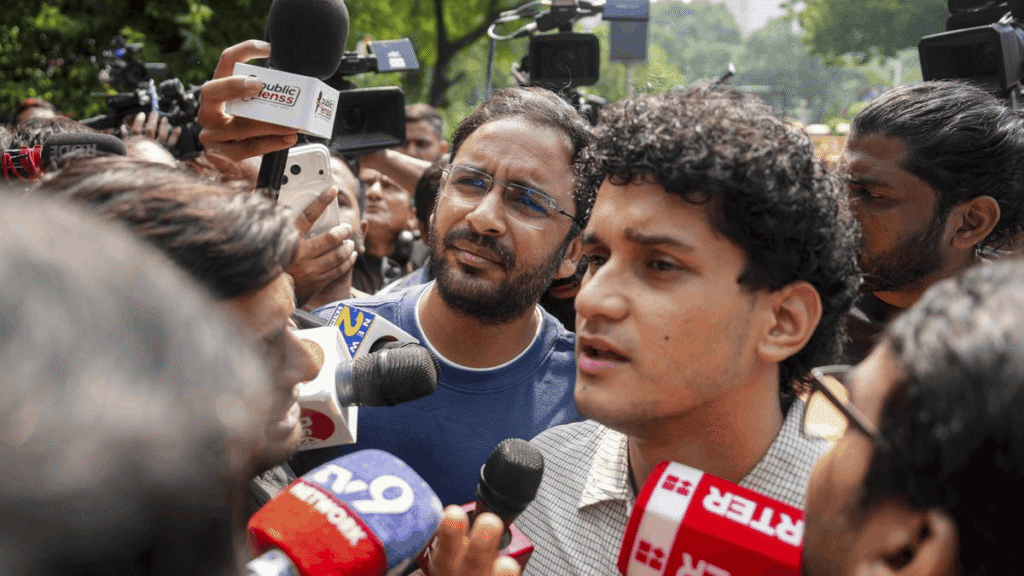
Protests against Chief Election Commissioner (CEC) Gyanesh Kumar continued in Delhi on October 13, 2026, as demonstrators demanded his resignation over alleged irregularities in electoral roll revisions. The agitation has intensified following police action against protesters and opposition leaders over the past several days.
Members of the Cockroach Janta Party (CJP) and other activist groups have challenged the Election Commission’s handling of electoral rolls, particularly the Special Intensive Revision (SIR) exercise. The Election Commission has denied allegations of bias, while the BJP has criticised the opposition’s claims.
Protesters Confront Police in Delhi
Police detained several CJP members during the latest demonstrations in the national capital. The protest followed days of heightened security, barricades and restrictions on gatherings in central Delhi.
The demonstrators are demanding accountability from the Election Commission and calling for Gyanesh Kumar’s removal. The protests have also drawn attention to the treatment of activists detained during earlier demonstrations.
Opposition Takes Electoral Roll Dispute to Supreme Court
On October 12, leaders of the INDIA bloc, including Congress leader Rahul Gandhi, marched towards the Supreme Court to challenge the SIR exercise and raise concerns about alleged electoral irregularities.
The opposition submitted a petition seeking an independent, time-bound investigation into decisions allegedly taken by the CEC. The march was stopped before the leaders could proceed further, although a petition was submitted to the court.
The opposition has argued that the electoral roll revision requires greater transparency and accountability.
Jantar Mantar Removed as Designated Protest Site
The demonstrations have also sparked a dispute over access to public protest venues. Delhi Police announced that Jantar Mantar had been removed from the list of designated protest sites, identifying alternative locations for demonstrations.
The decision came amid a wider security crackdown that included the detention of protesters and temporary restrictions affecting transport and mobile internet services during earlier rallies.
The Supreme Court has separately directed authorities to prevent illegal detentions and ensure the normal functioning of public transport and internet services, subject to law and order requirements.
Election Commission Faces Growing Scrutiny
The controversy centres on allegations that changes to electoral rolls could affect eligible voters. Opposition parties have questioned the process and demanded an investigation into the Election Commission’s decisions.
The Commission has rejected allegations of political bias, maintaining that voters whose names have been removed can seek re-enrolment through the prescribed process. The BJP has also accused critics of undermining the credibility of democratic institutions.
What Happens Next?
The protests have expanded beyond Delhi, with political groups and activists announcing further demonstrations in other states. The Supreme Court proceedings and the response of election authorities are likely to remain central to the dispute.
As the agitation continues, questions surrounding electoral roll revisions, the right to peaceful protest and the independence of election institutions are expected to remain in the public debate.