
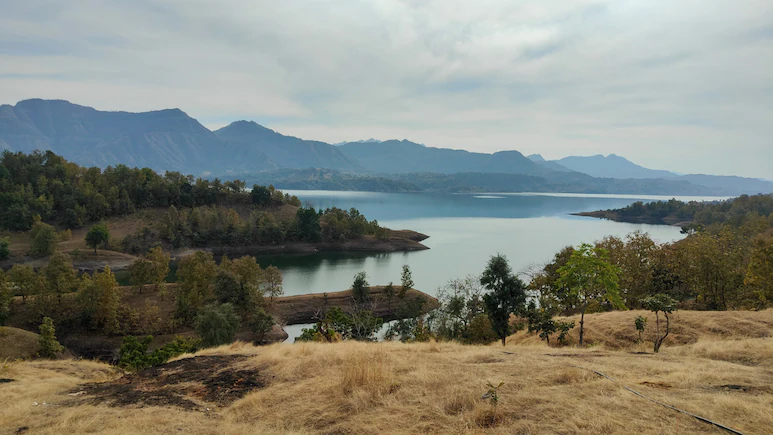
India is home to rivers known for their cultural, religious and geographical importance, but the Narmada River stands out for its remarkable geological history. Estimated to be around 160 million years old, the river flows through an ancient rift valley that existed long before the Himalayas reached their present form.
Originating in Madhya Pradesh and flowing west towards the Arabian Sea, the Narmada offers travellers a mix of natural beauty, pilgrimage sites and prehistoric discoveries.
A River With Ancient Geological Roots
The Narmada Valley dates back to a period when the Indian subcontinent was part of the ancient supercontinent Gondwana. Geological movements shaped the rift valley through which the river flows today.
The Narmada’s history is closely connected to the evolution of India’s landscape. Its age is often contrasted with the Ganga’s modern drainage system, estimated to be around 50 million years old.
Why the Narmada Flows West
Unlike many major Indian rivers that flow eastwards, the Narmada travels west through a valley between the Vindhya Range to the north and the Satpura Range to the south.
The river does not form a typical delta. Instead, it drains through the Gulf of Khambhat before reaching the Arabian Sea, near Bharuch in Gujarat.
From Amarkantak to the Arabian Sea
The Narmada originates at the Amarkantak Plateau in Madhya Pradesh and travels approximately 1,312 kilometres. Along its course, it passes through landscapes ranging from forested highlands to rocky gorges and fertile plains.
Its journey connects several important destinations in Madhya Pradesh and Gujarat, making it significant for both tourism and local communities.
Places to Visit Along the Narmada
Amarkantak, Madhya Pradesh: The river’s source is marked by the Narmada Udgam Kund, a major pilgrimage destination surrounded by forests and hills.
Bhedaghat, near Jabalpur: Famous for its towering marble rocks and scenic gorge, Bhedaghat offers visitors striking river views and boat rides when conditions permit.
Omkareshwar, Madhya Pradesh: Located on the Narmada, this pilgrimage town is known for its revered temple and spiritual traditions associated with the river.
Bharuch, Gujarat: Situated near the river’s approach to the Arabian Sea, Bharuch has a long history as a settlement linked to river and maritime trade.
A Valley Rich in Prehistoric Discoveries
The Narmada Valley is important to scientists because it has yielded dinosaur fossils, ancient human remains and evidence of early human activity.
The region’s discoveries offer clues about India’s prehistoric environments and the life forms that inhabited the subcontinent millions of years ago.
The Narmada’s Spiritual Significance
Beyond its geological history, the Narmada holds a special place in Hindu traditions and is also known as Reva. Many devotees consider the river sacred, and pilgrimage centres along its banks attract visitors throughout the year.
The combination of religious heritage, dramatic scenery and ancient geology makes the Narmada an important destination for travellers interested in India’s natural and cultural history.
Why This Ancient River Matters
The Narmada is more than a waterway connecting central India to the Arabian Sea. Its valley preserves evidence of geological change and prehistoric life, while its banks continue to support towns, communities and pilgrimage traditions.
For visitors, exploring the Narmada offers an opportunity to experience India’s landscape through both its natural wonders and its living heritage.