
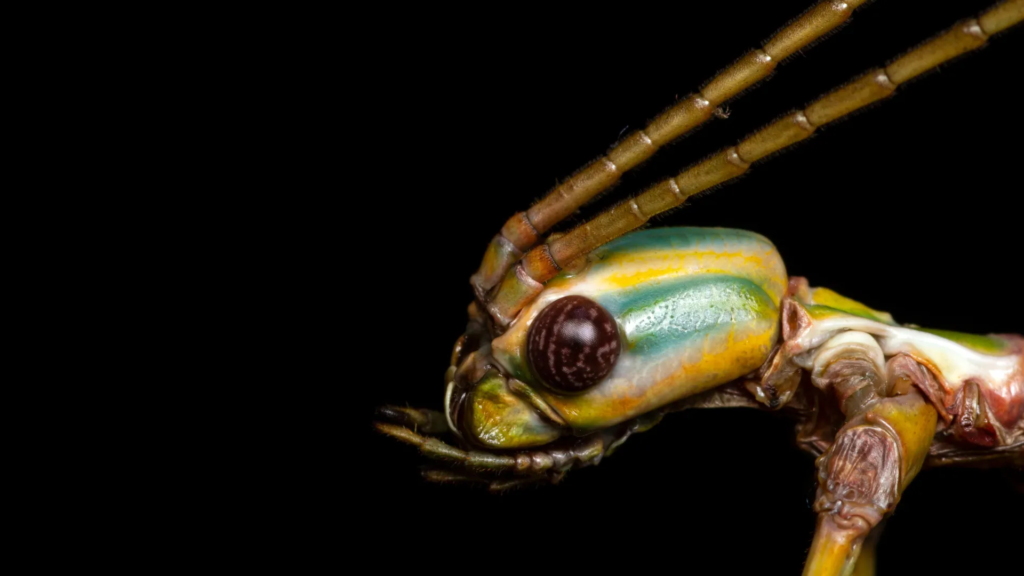
Scientists have uncovered a surprising piece of Australia’s hidden biodiversity after identifying two previously unknown species of giant stick insects. The discovery also revealed that a familiar Australian stick insect had been incorrectly classified for decades.
Researchers from the University of Sydney re-examined members of the Anchiale genus using DNA analysis, museum specimens, field observations and captive insects. Their work showed that what had previously been considered two species actually represented five distinct species.
A Stick Insect Mystery Solved
One of the insects had been known to scientists and insect enthusiasts for years, but genetic and physical evidence showed that it was a separate species.
Researchers have now recognised it as Anchiale robusta, resolving a classification mistake that had remained unnoticed for decades.
A Completely New Species
The team also formally described Anchiale mabiensis, a newly identified species found in Queensland’s critically endangered Mabi rainforest on the Atherton Tablelands.
The insect has an especially unusual feature: its eggs have a distinctive lid-like structure that researchers say has not previously been documented in stick insects or their closest relatives.
How Scientists Found the Hidden Species
The discovery involved more than simply spotting unfamiliar insects. Researchers combined DNA testing, museum collections, field surveys, citizen-science observations and captive breeding to determine how the insects were related.
More than 1,000 observations of Australian stick insects have already been recorded through platforms including iNaturalist and the Atlas of Living Australia, showing how public observations can contribute to biodiversity research.
Australia Has a Remarkable Stick Insect Diversity
Australia is home to around 130 known stick insect species, while more than 3,600 species are known worldwide.
These insects are famous for their extraordinary camouflage. Their bodies can resemble twigs, leaves or bark, allowing them to disappear into vegetation and avoid predators.
Some species have other unusual survival strategies. Certain stick insects can reproduce without males through parthenogenesis, while others can release irritating chemicals or detach a leg when attacked.
Why Identifying Species Matters
The discovery is important beyond taxonomy. One group of stick insects can occasionally reach very high population levels and strip leaves from trees.
Knowing that several species had previously been grouped together could help scientists and land managers better understand their behaviour and potential effects on forestry and agriculture.
More Species May Still Be Waiting
Researchers suspect there could be another undescribed species in Cape York, although additional specimens are needed before its status can be confirmed.
The findings highlight how much biodiversity may still remain undocumented, even among animals that have been observed and studied for many years.
For scientists, the discovery is another reminder that Australia’s forests and ecosystems can still reveal unexpected species and that careful classification is essential for understanding and protecting them.