
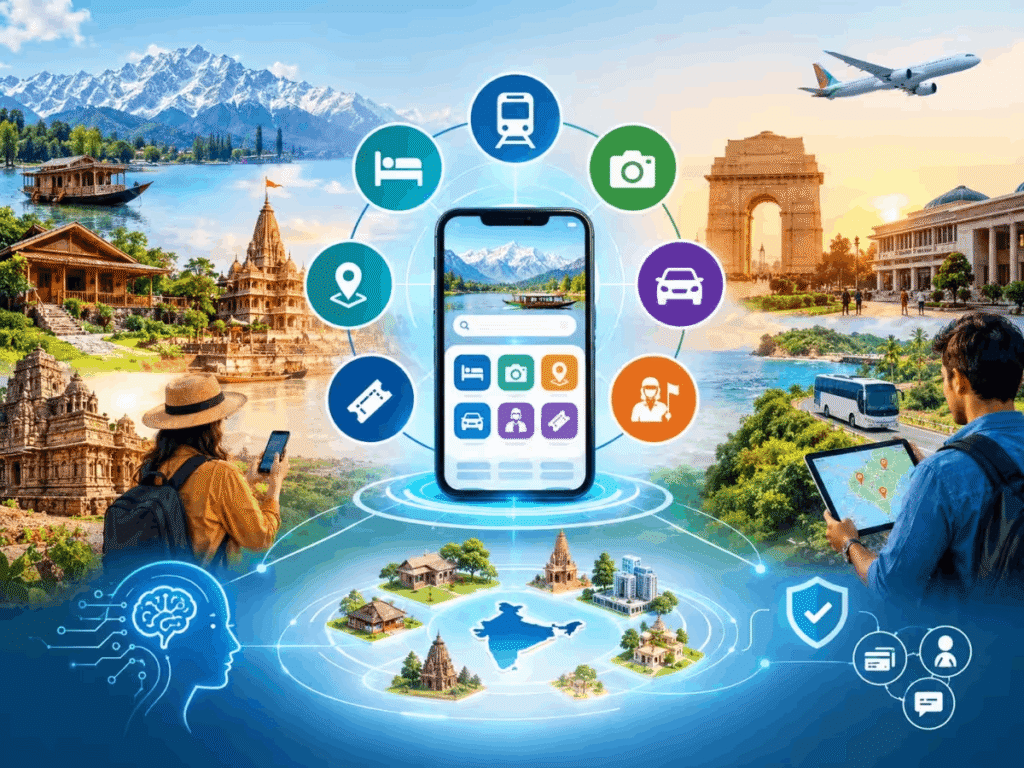
Planning a holiday in India can often mean switching between multiple websites and apps for transport, accommodation, sightseeing and local experiences. A new government-backed digital initiative aims to make that process more connected.
The Ministry of Tourism, in collaboration with the Open Network for Digital Commerce (ONDC), has launched the National Digital Tourism Stack (NDTS) to create shared digital infrastructure for India’s tourism sector.
One Digital Network for Different Travel Needs
The idea behind the National Digital Tourism Stack is to bring different parts of the tourism ecosystem into a more connected digital environment.
Instead of tourism providers operating in isolated systems, the initiative is designed to make their offerings discoverable across participating digital platforms. This could include stays, local experiences and other tourism services.
The government’s broader vision includes a “One ticket, One pass” approach aimed at making journeys easier to plan and access digitally.
23,000 Tourism Experiences and Homestays in Focus
The programme has a large target. The government plans to bring 23,000 tourism experiences and homestays onto the network and make them discoverable, trustworthy and bookable by the end of 2028.
This could give smaller tourism businesses greater visibility, particularly those that may not have a strong presence on major travel platforms.
AI Could Become Part of Trip Planning
Artificial intelligence is expected to play an important role in the project. The Tourism Ministry has highlighted AI, digital platforms and data-driven destination management as tools that could make tourism more accessible and personalised.
For travellers, this could eventually mean easier destination discovery and more connected planning. However, the exact consumer experience will depend on how the system develops during its phased rollout.
What It Could Mean for Local Tourism
The initiative is also connected to a broader effort to promote destinations beyond India’s most heavily visited tourist spots.
The government has launched Dekho Apna Desh 2.0, which focuses on lesser-known destinations, including selected hill and mountain areas, coastal locations, heritage towns and regional pilgrimage destinations. The programme also aims to create bookable itineraries involving accommodation, transport, food and local experiences.
This approach could create more opportunities for local guides, homestay owners, artisans and other tourism-related businesses.
More Discoverability for Travellers
ONDC’s existing Travel & Experiences network already supports digital discovery of tourism experiences, monuments, museums, walking tours and events across participating consumer applications.
The new national stack is intended to build on this kind of open digital infrastructure and bring more tourism providers into the connected ecosystem.
When Will Travellers See the Changes?
The National Digital Tourism Stack is being introduced in phases, rather than as an instant replacement for existing travel-booking services. The government has announced a pilot for January 2027, with the wider programme expected to develop over the following years.
For now, travellers should continue using existing booking platforms and official tourism channels. As the new network expands, its impact will depend on the number of providers, platforms and destinations that join.
A More Connected Future for Indian Travel
India’s new digital tourism initiative signals a shift towards a more connected approach to travel planning. By bringing tourism providers, digital platforms and government systems into a shared ecosystem, the project aims to make discovering and accessing travel experiences simpler.
If the planned rollout reaches its targets, travellers could eventually have easier digital access to everything from homestays and local activities to transport and destination experiences—while smaller tourism businesses gain a wider online audience.