
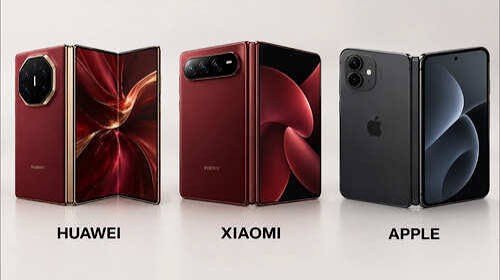
Foldable smartphone competition is becoming more varied, with manufacturers choosing very different ways to make larger screens useful. Huawei is developing tri-fold hardware, Xiaomi is refining the book-style format, and Apple is preparing to enter the premium segment.
Huawei is pushing beyond the traditional two-panel design with its Mate XT2. The phone folds twice and opens into a tablet-like display. Its updated hinge, water resistance and proprietary Kirin 9050 Pro platform show how the company is combining unusual hardware with in-house technology.
Xiaomi is taking a more familiar route with the 18 Fold. Its wider inner screen, large battery, Leica-enhanced cameras and XRing O3 processor are aimed at making a foldable feel closer to a conventional flagship phone.
Apple’s expected foldable iPhone would arrive after competitors have spent years improving flexible displays, hinges and battery efficiency. A high price is likely, but Apple may rely on its ecosystem and software integration to justify the premium.
The competition is increasingly about more than folding a screen. Buyers will compare durability, multitasking, cameras, battery life and whether a larger display genuinely improves daily use. As more companies develop their own chips and folding systems, foldables could become one of the most important smartphone battlegrounds of the next few years.