
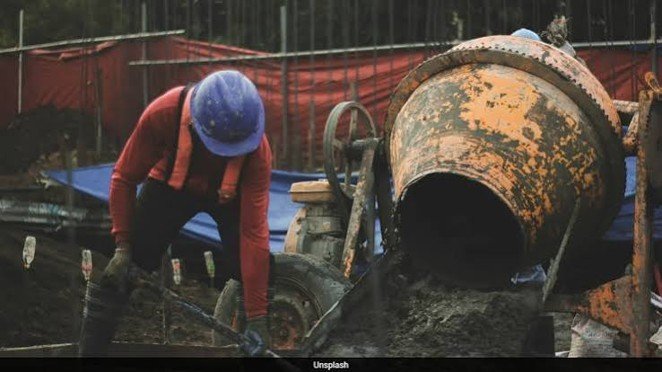
A material normally treated as waste could have another use: helping produce stronger concrete. Researchers at Manipal University Jaipur have explored the use of biochar made from treated sewage sludge as a partial replacement for cement.
The sewage waste was collected at a treatment facility in Warangal. Researchers processed it at high temperatures and converted the resulting material into a fine powder before mixing it into concrete.
Promising Strength Results
Different replacement levels were tested. At a 10% replacement level, the concrete recorded a 21% increase in compressive strength and as much as a 42% improvement in flexural strength after 91 days.
Researchers suggest that the porous structure of biochar may help manage moisture inside concrete, while its mineral content could support reactions related to strength.
Why This Approach Is Interesting
Cement production has a significant environmental footprint, while sewage sludge needs careful waste management. Using treated waste as a construction material could potentially address both challenges.
But More Is Not Always Better
Higher amounts of biochar did not necessarily improve the concrete. At greater replacement levels, more pores and cracks developed and performance declined.
The researchers also say more testing is needed, including studies under extreme temperatures and salt exposure and assessments of possible heavy-metal concerns.
For now, sewage-derived biochar is an early research direction rather than a material ready for widespread construction use.