
Technology is no longer something people use only when they sit in front of a computer. It has become part of everyday routines, from waking up with a smartphone alarm to ordering food, communicating with friends, working remotely and finding information online.
The result is a lifestyle that is faster, more connected and increasingly dependent on digital tools. But as technology becomes more useful, another question is becoming important: how much of our daily life should we hand over to technology?
Smartphones Have Become Everyday Assistants
For many people, the smartphone has become one of the first things they check in the morning and one of the last things they use at night.
A single device can now handle communication, navigation, shopping, entertainment, payments, work tasks and access to information. This convenience has reduced the need to switch between different devices or services for everyday activities.
The smartphone is therefore no longer simply a communication device. It has become a central part of modern daily life.
AI Is Making Digital Life More Personal
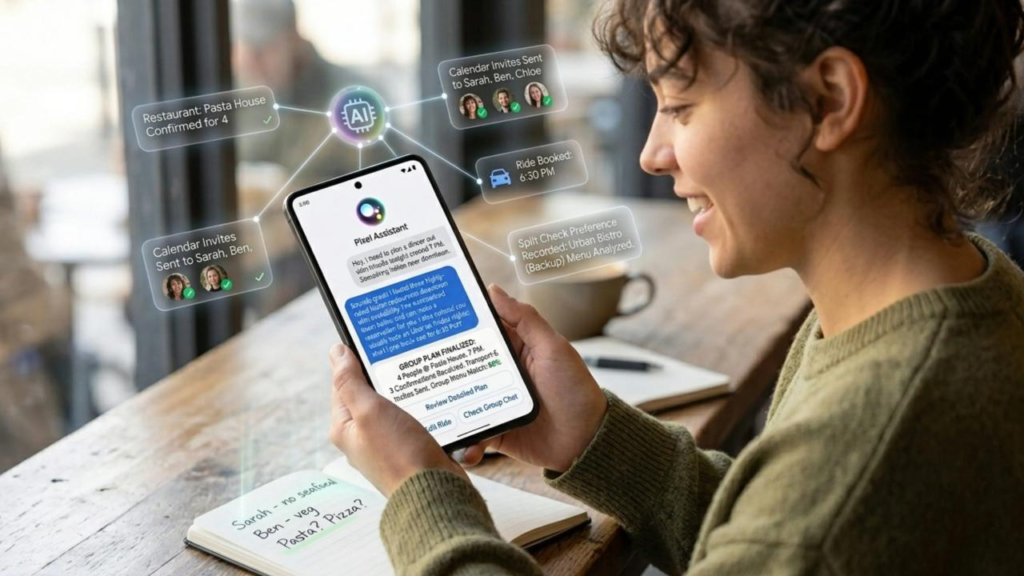
Artificial intelligence is adding another layer to the digital lifestyle.
AI-powered tools can help people organise information, generate content, automate repetitive tasks and find answers more quickly. At work, automation can reduce the time required for routine processes, while digital tools can make collaboration easier between people working from different locations.
For everyday users, the important change is that technology is increasingly adapting to individual needs rather than simply providing the same service to everyone.
Work Is Becoming More Flexible—and More Connected

Technology has changed where and how many people work.
Video meetings, cloud-based software, instant messaging and shared digital documents allow teams to collaborate without being in the same physical location. Tasks that once required lengthy manual processes can also be completed more quickly with software and automation.
This flexibility has made remote and hybrid working possible for many types of jobs. But it has also created a new challenge: when work can reach someone anywhere, it can become difficult to completely switch off.
Learning Is No Longer Limited to the Classroom
The internet has made education and skill development more accessible.
People can watch tutorials, take online courses, attend virtual classes or learn from experts through digital platforms. Someone interested in photography, cooking, languages, design or technology can begin learning without necessarily joining a traditional classroom.
This has changed the meaning of everyday learning. A person can now learn something new whenever a question or interest appears.
Communication Has Become Instant
Distance has become less important in everyday communication.
Messages, video calls and social platforms allow people to stay connected with friends, family members and colleagues around the world. The internet has also made it possible for workplaces and communities to communicate in real time across different locations.
However, constant connectivity can also create pressure to respond immediately. The convenience of being reachable can sometimes make it difficult to create clear boundaries between online and offline time.
Convenience Is Changing Everyday Decisions
Technology has also changed how people handle ordinary tasks.
Shopping, booking transport, finding restaurants, making payments and accessing services can often be done from a phone. Instead of spending time travelling to a store or office, people can complete many tasks digitally.
This saves time, but it also means that more decisions are now influenced by digital recommendations, advertisements, reviews and algorithms.
The Attention Problem

One of technology’s biggest lifestyle challenges is not convenience but distraction.
Notifications, messages, social-media feeds and emails can interrupt people throughout the day. Sogolytics notes that the constant flow of digital interruptions can make it harder to concentrate and can blur the boundary between work and personal life.
The issue is therefore not necessarily how much technology people own, but how much attention they allow it to claim.
Privacy Is Becoming Part of Everyday Life
Everyday digital activity produces information.
Online purchases, social-media activity, searches, financial transactions and the use of digital services can all contribute to a person’s digital footprint. As more activities move online, questions about how personal information is collected, stored and used become increasingly relevant.
This makes basic digital awareness an increasingly important part of modern life.
The New Challenge: Knowing When to Disconnect
Technology is designed to make life easier, but constant access can make it harder to create boundaries.
Work messages can arrive after office hours. Entertainment is always available. Social platforms can be opened whenever there is a spare moment. The result can be a lifestyle in which people remain digitally connected even when they are supposed to be relaxing.
Creating boundaries—such as turning off unnecessary notifications, setting technology-free periods or keeping work communication within specific hours—can help people use technology without allowing it to dominate their routines.
Technology Should Serve the Lifestyle
The biggest change brought by technology is not a single device or application. It is the way digital tools have become woven into ordinary life.
Technology can make work faster, communication easier, learning more accessible and everyday tasks more convenient. At the same time, constant connectivity can create distraction, privacy concerns and difficulty disconnecting.
The goal of the modern digital lifestyle is therefore not to avoid technology. It is to use it deliberately.
The most useful technology should make life simpler without taking over the parts of life that do not need a screen.