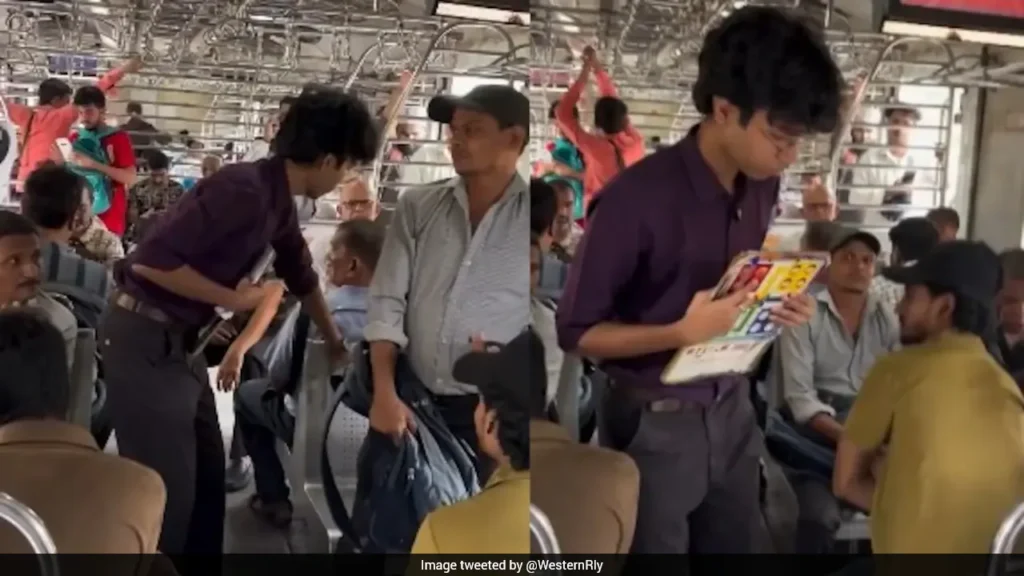
A social-media prank on Mumbai’s local trains has taken an unexpected turn after railway authorities stepped in.
Content creator Mayank Jha had been filming a series of videos in which he approached passengers and conducted what looked like a railway-style seat inspection. But the “audit” was not official—and the videos eventually attracted the attention of railway authorities.
1. 🎥 It Started as Social-Media Content
Jha had been recording videos at Mumbai railway stations and inside local trains for several months.
His content included interactions with commuters and staged situations designed to attract viewers online.
2. 💺 The Fake Seat Inspection
In one of the videos, Jha approached passengers sitting inside a local train and asked them to stand up.
He presented the interaction as a kind of seat audit, despite not being a railway employee.
3. 😳 Passengers Were Put on the Spot
For commuters simply trying to get through their daily journey, being unexpectedly asked to leave their seats could be confusing and uncomfortable.
The incident raised questions about how far creators should go when making prank content in public spaces.
4. 📱 The Videos Get Attention
The prank videos circulated on social media and eventually came to the attention of the RPF.
What may have started as an attempt to create entertaining content suddenly became a matter involving railway authorities.
5. 👮 RPF Summons the Creator
RPF officials summoned Jha to Bandra and counselled him about his behaviour.
Authorities warned him about the possible legal consequences of harassing or inconveniencing passengers while creating social-media content.
6. 🙏 An Apology Followed
Jha subsequently apologised for his actions.
He acknowledged that the stunts were inappropriate and said he would stop his Mumbai local train prank series.
7. 🚨 Railways Sends a Message
Western Railway also addressed the incident publicly, urging commuters and content creators not to disturb fellow passengers for the sake of online entertainment.
The message was simple: viral content shouldn’t come at the expense of another passenger’s comfort or safety.
8. 🎬 When Pranks Go Too Far
The episode highlights a growing problem with viral-content culture.
Creators often look for unusual situations that will generate views, but public transport is a shared space where other people have not necessarily agreed to become part of someone’s content.
9. 📵 Views vs Responsibility
A prank might generate thousands of views in a few hours, but the consequences can continue long after the video goes viral.
In this case, the creator’s content resulted in an official intervention and a warning from railway authorities.
10. 🚆 The Takeaway
Mumbai’s local trains carry millions of passengers and are an essential part of daily life.
For content creators, the incident is a reminder that creativity and entertainment need boundaries especially in crowded public spaces.
A prank may make people watch, but when real passengers become unwilling participants, the pursuit of viral fame can quickly become a problem.