
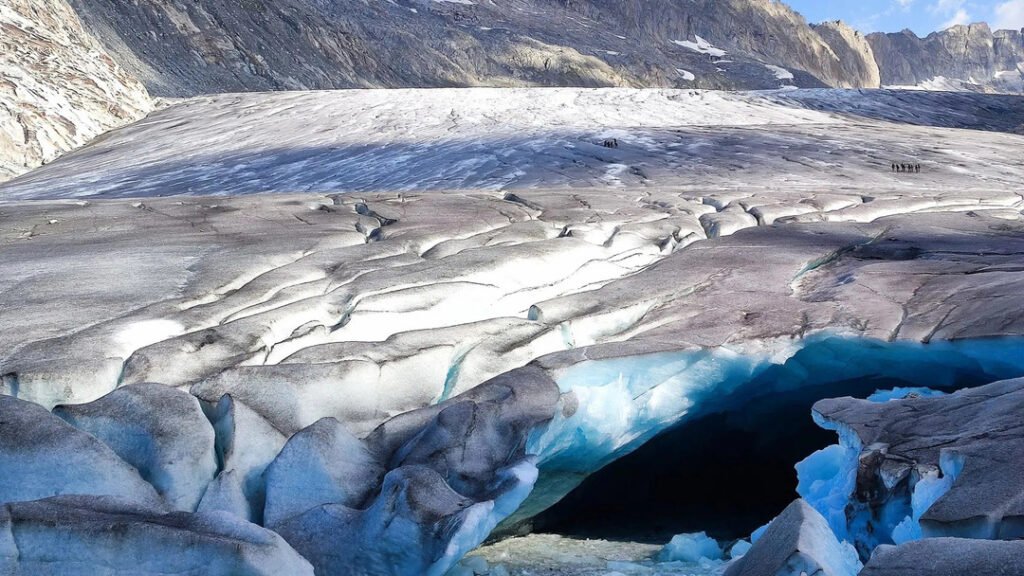
Switzerland’s glaciers are shrinking at an alarming rate, with nearly one-fifth of their total ice volume disappearing over the past five years. A new report has highlighted the growing impact of unusually low snowfall and extreme summer temperatures on the country’s iconic mountain landscapes.
According to findings from the Swiss Academy of Sciences, Switzerland’s glaciers lost more than 5% of their total ice volume in 2026 alone.
Major Glaciers Record Severe Melting
Some of Switzerland’s best-known glaciers, including the Rhône, Aletsch and Clariden glaciers, experienced their most severe melting on record in 2026. Glaciers thinned by an average of 2.5 to 4 metres, while some lower sections lost as much as 10 metres of ice.
Smaller glaciers have also disappeared completely. Bella Tola in Valais and Griessfirn in Glarus are among those reported to have vanished.
Low Snowfall and Extreme Heat Accelerate Ice Loss
The winter of 2025–26 was among Switzerland’s ten least snowy winters since records began. With less snow covering the glaciers, exposed ice became more vulnerable to rising temperatures.
Conditions worsened between May and September 2026 as persistent heat and dry weather accelerated melting. Temperatures remained above freezing at elevations exceeding 4,000 metres on 76 days, setting a new Swiss record.
Glaciers Temporarily Help Ease Water Shortages
Glacier meltwater provided temporary relief from summer water shortages. Between July and September 2026, Switzerland’s glaciers released approximately 2.2 trillion litres of water—more than four times the amount Swiss households consume as drinking water in an entire year.
However, this additional supply comes at a long-term cost. As glaciers continue to shrink, their ability to provide meltwater during warmer months is expected to decline.
A Warning About the Future
The findings underline how rapidly climate conditions are transforming Switzerland’s mountain environment. Continued glacier loss could affect seasonal water availability and the ecosystems and communities that depend on it.
Researchers monitor these changes through the Glacier Monitoring Switzerland network, which collects long-term data on glacier mass and ice loss. The latest findings highlight the importance of tracking these changes as temperatures rise and snowfall patterns shift.