
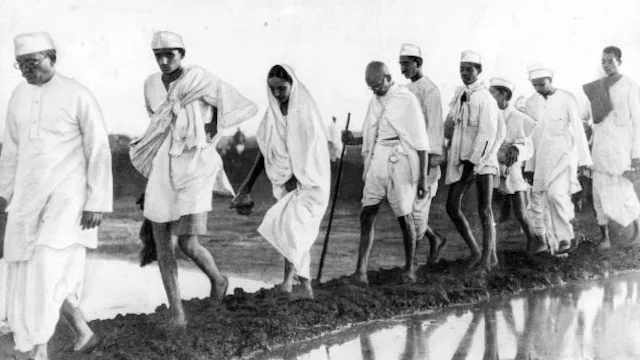
Long before fitness trackers, step-counting apps and gym memberships became part of everyday life, Mahatma Gandhi made walking a regular part of his routine.
Historical medical records and ICMR material indicate that Gandhi walked around 18 km a day for nearly four decades. During his campaigns between 1913 and 1948, he is estimated to have covered about 79,000 km on foot.
His approach to physical wellbeing, however, involved much more than walking.
Walking Was Part of Everyday Life
For Gandhi, walking was not necessarily a separate workout squeezed into a busy schedule. Movement was integrated into his daily activities and travels.
His routine at Sevagram Ashram included a morning walk of around 5 km, along with physical tasks such as cleaning, working in the kitchen, cutting vegetables and grinding wheat. An evening walk was also part of the schedule.
This made physical activity a regular feature of the day rather than an occasional exercise session.
Gandhi’s Interest in Yoga
Walking was only one part of Gandhi’s interest in physical wellbeing. Historical accounts also document his interest in yoga and nature cure.
His association with yoga teacher and researcher Swami Kuvalayananda in the 1930s is discussed in medical literature examining Gandhi’s approach to health.
His broader philosophy connected physical activity with disciplined living, diet, cleanliness and mental wellbeing.
Why Walking Still Matters Today
Modern health guidance continues to recognise walking as a practical form of physical activity.
The Mayo Clinic notes that regular brisk walking can support cardiovascular fitness, help with weight management and improve mood, sleep and physical function. Even shorter walks can contribute to overall activity when accumulated throughout the day.
The important point is that people do not need to reproduce Gandhi’s extraordinary walking distance to benefit from being more active.
You Don’t Need 18 Km a Day
Gandhi’s reported 18-km daily routine was exceptional and should not be treated as a universal fitness target.
For someone with a sedentary lifestyle, a more practical approach could simply involve taking regular walks, reducing long periods of sitting, choosing stairs when appropriate or adding short movement breaks during the day.
Starting gradually can also make a routine easier to maintain.
The Bigger Lesson From Gandhi’s Routine
The most relevant part of Gandhi’s fitness routine may be its consistency.
His daily schedule incorporated walking and physical work into ordinary life. Rather than depending on sophisticated equipment, his routine relied heavily on movement, discipline and regularity.
More than seven decades after his death, that basic idea remains relevant: staying active does not always require an elaborate workout plan. For many people, making movement a regular part of the day can be a simple starting point.