
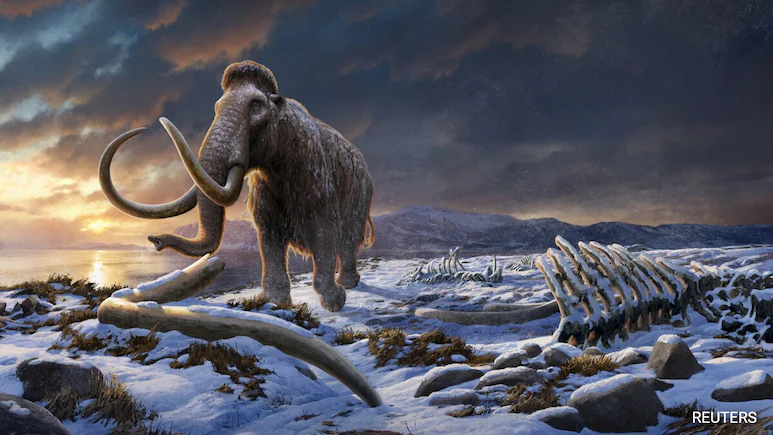
The idea of seeing a woolly mammoth walk the Earth again sounds like science fiction, but researchers are using artificial intelligence and gene-editing technology to explore whether a mammoth-like animal could one day be created.
Biotechnology company Colossal Biosciences is working on the project, although the timeline has moved further into the future as scientists have discovered that the genetic challenge is more complicated than initially expected.
Why AI Is Being Used
Researchers are dealing with an enormous amount of genetic information. AI can help analyse genetic sequences and identify combinations of changes that may influence traits such as fur, body shape and the ability to tolerate extreme cold.
The technology is being used alongside CRISPR-based gene editing rather than replacing the biological work involved in creating an embryo.
More Genes Need to Be Studied
Earlier plans reportedly estimated that around 60 genetic changes might be enough to create a mammoth-like elephant. Researchers now believe that more than 150 genes may need to be altered to reproduce a broader range of mammoth characteristics.
Those traits include thick hair, smaller ears, a domed skull and adaptations that could help an elephant-like animal survive in freezing environments.
It Would Not Be an Exact Mammoth Clone
One important distinction is that the proposed animal would not be a genetically identical copy of an extinct woolly mammoth.
The project aims to modify the genome of a living elephant, particularly using the close genetic relationship between woolly mammoths and Asian elephants. The resulting animal would therefore be a cold-adapted elephant carrying selected mammoth-like characteristics.
What Has Already Been Achieved?
The research has produced genetically engineered mice with mammoth-inspired traits, including shaggy hair. Colossal has reported a family of 38 such woolly mice as part of its ongoing work.
These experiments are intended to help researchers understand how particular genetic changes influence physical characteristics before attempting much more complicated work involving elephants.
The Timeline Has Changed
The company had previously discussed producing a mammoth-like calf by 2028. The latest reports indicate that the target has shifted to the early 2030s, with no firm birth date currently set.
The delay highlights how difficult it is to predict the outcome of large-scale genome engineering.
Why the Research Matters Beyond Mammoths
The technology being developed could have applications beyond de-extinction. Researchers hope that advances in genome analysis and editing could contribute to conservation research involving endangered elephants and improve understanding of genetic traits.
Colossal itself describes elephant conservation as one of the broader goals of its mammoth project.
A Scientific Experiment Still Full of Questions
Bringing back a woolly mammoth in its original form is not currently possible. Scientists instead are exploring whether modern elephants can be genetically modified to express key mammoth characteristics.
The project therefore represents an ambitious combination of AI, ancient DNA research, genetic engineering and reproductive biology. Whether it ultimately produces a mammoth-like animal remains an open scientific question, but the research is already pushing the boundaries of what scientists can do with genomes.