
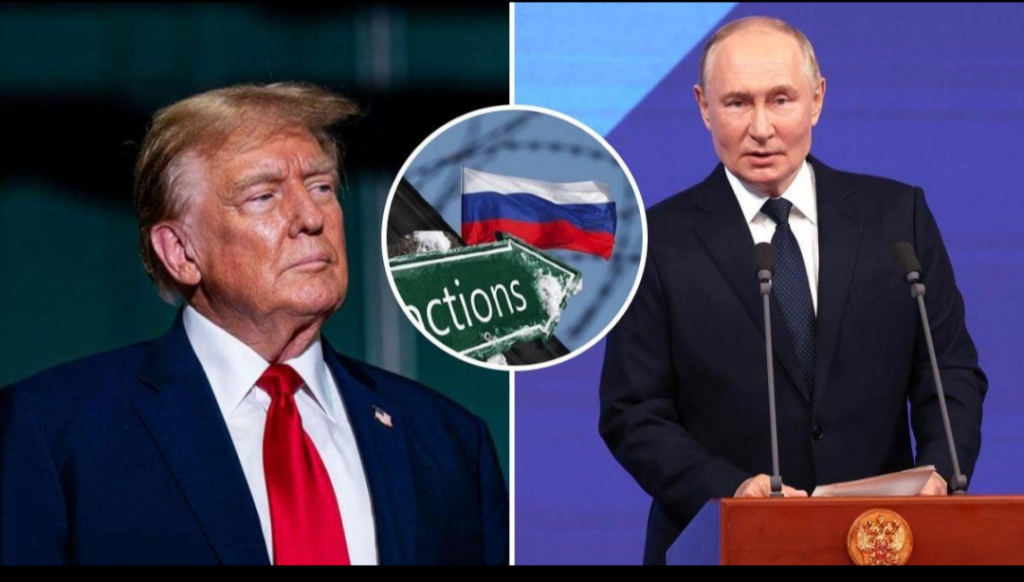
Washington, September 19, 2026 – US President Donald Trump on Friday signed into law a sweeping sanctions package aimed at increasing economic pressure on Russia over its ongoing war in Ukraine.
The legislation, formally titled the Lindsey O. Graham Sanctioning Russia and Iran Act of 2026, was signed a day after it cleared Congress with strong bipartisan support. It is named after the late Republican Senator Lindsey Graham of South Carolina, a close ally of Trump and longtime advocate of tougher measures against Moscow, who died in July 2026 shortly after returning from Ukraine.
What the Bill Does
The new law targets multiple pillars of Russia’s economy and leadership:
Sanctions on Russian officials, including President Vladimir Putin and senior government and military figures.
Measures against Russian banks and financial institutions.
Crackdown on Russia’s “shadow fleet” of oil tankers used to circumvent existing energy sanctions.
Restrictions aimed at Russia’s energy and defence industries.
A central and controversial provision gives the president authority to impose tariffs of up to 100% on the top five importers of Russian oil or natural gas. China and India, the largest buyers of Russian crude, are expected to be most affected. The bill includes limited exceptions for countries that import less than 15% of Russia’s natural gas and are taking steps to reduce dependence.
The legislation also extends existing sanctions on Iran’s energy and weapons sectors for five years.
Legislative Path
The bill passed the Senate 86-11 and the House of Representatives 262-159. While many Democrats supported the Russia-focused measures, a significant number opposed the expanded presidential tariff powers, arguing they grant the White House excessive authority that could last beyond the current administration and create broader trade uncertainty.
Supporters, including co-sponsor Democratic Senator Richard Blumenthal, have described the package as “scorching sanctions” intended to throttle the funding for Russia’s war machine and push Moscow toward negotiations. Ukrainian President Volodymyr Zelensky welcomed the House passage earlier in the week.
Context and Reaction
The war in Ukraine is now in its fifth year. Previous US administrations imposed multiple rounds of sanctions, but Russia has continued to generate significant revenue from energy exports, partly through the shadow fleet and sales to non-Western buyers.
Trump had earlier been cautious about additional sanctions, preferring negotiation. The administration shifted after stalled diplomatic efforts. Critics warn the broad tariff language could complicate relations with major trading partners and inject further uncertainty into global markets.
The White House said the law strengthens tools to pressure Russia while giving the president discretion through waivers. Implementation details, particularly regarding tariffs, will be watched closely in the coming weeks, including ahead of high-level meetings with leaders of major energy-importing nations.