
The Lucknow bench of the Allahabad High Court has directed the Uttar Pradesh government to prepare a comprehensive roadmap aimed at preventing critically ill patients from being repeatedly shifted between hospitals and strengthening the state’s healthcare delivery system.
A division bench of Justice Rajan Roy and Justice Manjive Shukla issued the directions while hearing a Public Interest Litigation (PIL) related to the death of a newborn. The infant had been brought from Sultanpur to Lucknow and was subsequently taken to multiple premier institutions — King George’s Medical University (KGMU), Ram Manohar Lohia Institute of Medical Sciences (RMLIMS), and Sanjay Gandhi Postgraduate Institute of Medical Sciences (SGPGI).
Court’s Directions
The court has asked the Additional Chief Secretary (Medical Health and Family Welfare) to place a tangible roadmap with clear timelines covering both immediate and long-term measures. The roadmap should focus on:
Strengthening medical facilities in newly opened medical colleges
Preventing the shuttling of critically ill patients between hospitals
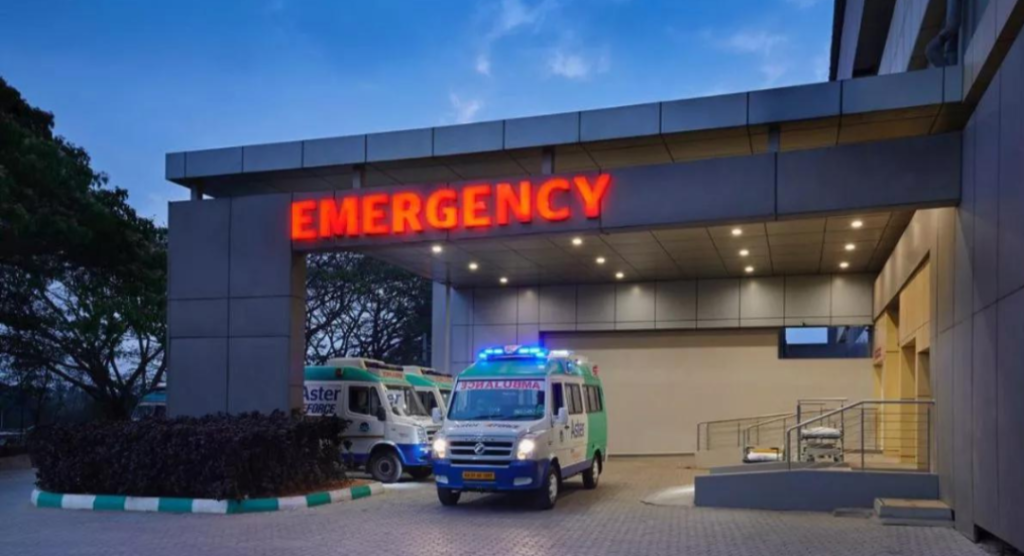
Improving ambulance services so that vehicles used for referrals are properly equipped
Establishing an online referral mechanism under which a referring hospital first confirms the availability of beds and required facilities at the destination hospital
The bench also sought details of the proportion of the state budget allocated to medical facilities and services, observing that lack of finance should not hinder the provision of medical care.
The court noted that the child required immediate specialised attention. Even when referral to Lucknow was necessary, an ordinary ambulance without adequate facilities was used. It stressed the need for qualified personnel to guide patients and attendants in major government hospitals, especially those coming from rural areas who may be unfamiliar with large institutional systems.
The judges emphasised the larger issue of decentralising healthcare so that patients are not forced to travel long distances to Lucknow for critical treatment. Newly established medical colleges should be equipped with special and super-speciality facilities, including adequate ventilators.
The matter has been listed for further hearing on October 1. The Additional Chief Secretary (Medical Education) and doctors familiar with the case from KGMU, SGPGI, and RMLIMS have been directed to join the proceedings through video conferencing.
The court’s intervention highlights ongoing concerns about coordination gaps, referral inefficiencies, and the need for a more patient-centric emergency healthcare system in Uttar Pradesh.