
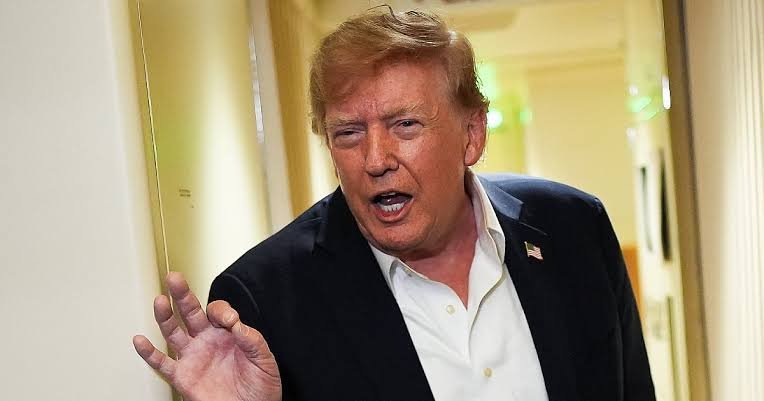
US President Donald Trump’s latest comments on artificial intelligence have sparked a fresh debate over AI regulation, data centres and the future of the technology industry. Trump has pushed back against new regulatory restrictions on artificial intelligence, arguing that excessive rules could slow innovation and undermine America’s position in the global AI race.
The debate comes at a time when AI companies are rapidly expanding their computing infrastructure. Large-scale data centres are being built across the United States to support increasingly powerful AI models, creating growing demand for electricity, land and other resources.
Trump has criticised efforts to introduce additional AI guardrails, describing opposition to artificial intelligence and data centres as part of what he called a “sick conspiracy.” His remarks underline his administration’s broader focus on encouraging technological development and maintaining US leadership in the global AI sector.
Supporters of a lighter regulatory approach argue that American AI companies need freedom to innovate and compete with China and other countries. They say excessive regulations could increase costs, delay new products and encourage technology companies to move investment elsewhere.
The rapid expansion of AI has made data centres an increasingly important part of the political and economic conversation in the US. AI systems require enormous computing power, meaning companies are investing billions of dollars in new facilities and specialised infrastructure.
However, communities located near proposed data centres have raised concerns about electricity consumption, water usage, environmental impact, noise and pressure on local infrastructure.
The issue has therefore created a difficult balancing act for policymakers. Governments want to attract technology investment and create jobs, while residents and environmental groups are demanding stronger safeguards.
The disagreement over AI guardrails reflects a much larger global debate. Governments are trying to determine how artificial intelligence can be developed safely without imposing rules that prevent innovation.
AI regulation can cover areas such as data privacy, cybersecurity, misinformation, automated decision-making and the use of AI in sensitive industries. Supporters of stronger safeguards argue that regulation is necessary to protect consumers and reduce potential risks.

Those favouring a less restrictive approach believe the technology is developing too quickly for rigid rules and that regulations should not prevent companies from experimenting with new AI applications.
America’s AI policy is also closely connected to its competition with China. Both countries are investing heavily in artificial intelligence, advanced chips, computing infrastructure and data centres.
The Trump administration has repeatedly emphasised the importance of keeping the United States at the forefront of emerging technologies. Any major change in AI regulation could therefore have consequences not only for American technology companies but also for the wider global AI industry.