
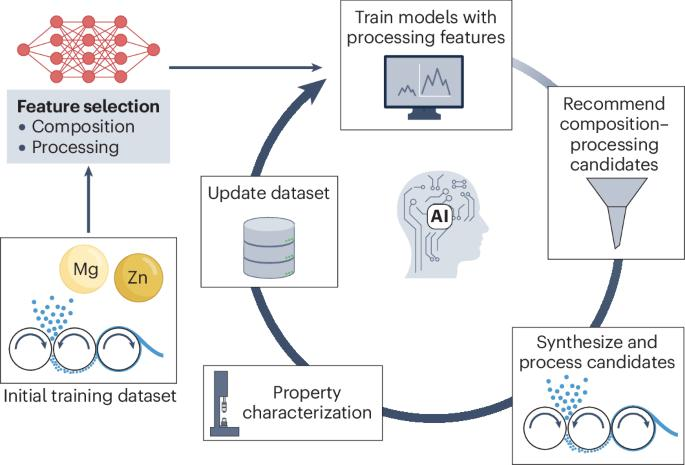
Artificial intelligence is moving beyond chatbots and image generators and into one of the most traditional areas of engineering: materials discovery.
Researchers at IIT Madras have developed an AI-based system that turns information scattered across thousands of scientific papers into a large searchable database of multicomponent alloys. The project has assembled around 185,000 alloy records, giving researchers a new way to explore materials that could be useful in future technologies.
The underlying research, published in Advanced Science in June 2026, uses large language models to extract information from more than 10,000 scientific articles and organize it into structured datasets.
Turning Thousands of Papers Into Usable Data
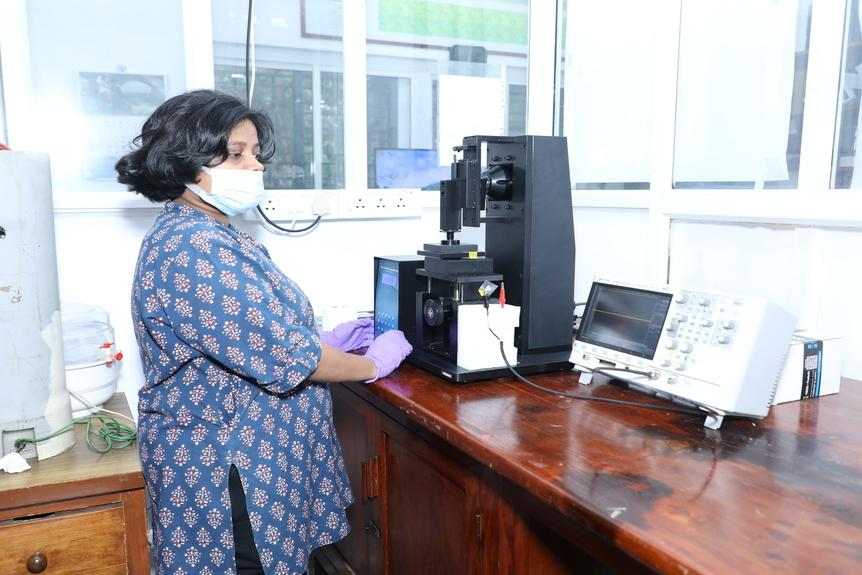
Materials research generates enormous amounts of information, but much of it is buried inside scientific publications, tables and technical descriptions.
Finding useful information manually can take considerable time. IIT Madras researchers developed an automated pipeline that uses large language models to extract details such as alloy composition, processing conditions, measured properties and characterization methods.
The system produced two major datasets: one containing 37,711 entries extracted from text and another containing 148,069 entries extracted from tables. Together, they form one of the largest publicly available databases of multicomponent alloy information.
AI Becomes a Materials Research Assistant
The significance of the project is not simply the size of the database.
By organizing previously scattered information, the system can help researchers identify relationships between an alloy’s composition, how it is processed and how it performs.
The researchers used prompt engineering and retrieval-augmented generation to improve the ability of the language models to understand materials-science information. Their evaluation produced F1 scores of approximately 0.83 for text extraction and 0.88 for table extraction.
This approach could make it easier for scientists to move from searching old research toward identifying promising candidates for new experiments.
Looking for Stronger and More Sustainable Materials
The researchers also tested the database for sustainability-focused materials selection.
Their work examined potential candidates in three areas: lightweight materials, soft magnetic materials and corrosion-resistant materials. The goal was to identify alloys that could offer useful performance while also presenting more sustainable production possibilities.
That could become increasingly important as industries look for materials that are not only strong or efficient but also less resource-intensive to produce.
Why Alloys Matter to Modern Technology
Alloys are fundamental to many technologies people use every day.
The right combination of metals can determine whether a material is lightweight enough for an electric vehicle, resistant enough for marine infrastructure or capable of operating reliably in demanding aerospace environments.
IIT Madras says the AI-driven platform could therefore have potential applications across areas including electric vehicles, aerospace, renewable energy and marine infrastructure.
From EVs to Renewable Energy
Lightweight alloys could help engineers reduce the mass of vehicles and other machines, potentially improving energy efficiency.
In renewable-energy systems, materials need to withstand demanding operating conditions for long periods. Similarly, marine structures require alloys that can resist corrosion, while aerospace applications often demand an unusual combination of low weight, strength and durability.
AI does not replace the need to physically test these materials. Instead, a system like this can help researchers narrow down the enormous number of possibilities before laboratory experiments begin.
A Different Role for Large Language Models
The project also demonstrates a less visible use of generative AI.
Instead of asking an AI model to write text or answer everyday questions, researchers are using language models to read scientific literature and structure technical knowledge.
IIT Madras has made the extracted dataset and associated code available for research use, potentially allowing other scientists to build on the work.
What Comes Next?
The researchers say the pipeline can be extended beyond the alloy systems examined in the study to other classes of materials. That could eventually create broader databases connecting material composition, manufacturing methods, properties and sustainability information.
The larger idea is significant: instead of spending years manually searching through fragmented research, scientists could increasingly use AI to map existing knowledge and identify promising directions for experiments.
For the technology industry, that could mean faster discovery of the materials needed for the next generation of vehicles, electronics, energy systems and advanced infrastructure.
IIT Madras’ work shows that one of AI’s most important future roles may not be creating digital content at all—it could be helping scientists discover the physical materials that make tomorrow’s technology possible.