
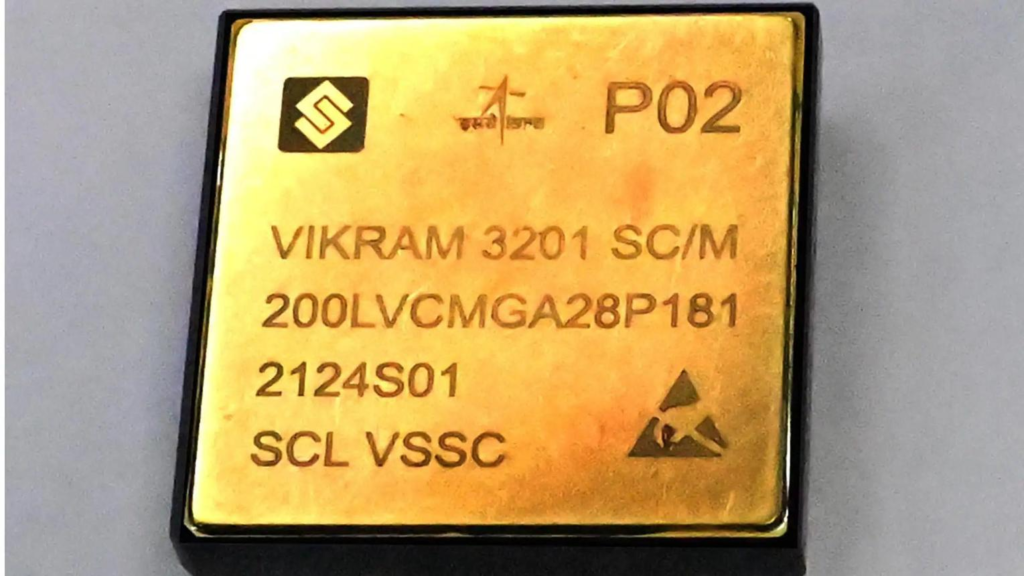
India’s semiconductor story is moving beyond smartphones, computers and electric vehicles. Indigenous chips developed for demanding space applications are now playing important roles in some of the country’s most ambitious missions, including Chandrayaan-3 and Aditya-L1. The development highlights how India’s push for semiconductor self-reliance is becoming closely connected with its space programme.
Much of this work is being carried out by the Semiconductor Laboratory (SCL) in Mohali, which develops specialised electronics for satellites, launch vehicles and spacecraft. These components have to function in an environment where radiation, extreme temperatures, vibration and other stresses can threaten ordinary electronics.
Chips Built for the Harshest Environment
A smartphone chip is designed for an entirely different environment from a spacecraft.
Electronics used during a space mission must continue working despite intense launch vibrations and the effects of radiation once a spacecraft leaves Earth’s protective atmosphere. A failure in a critical electronic component can potentially affect an entire mission.
SCL’s work therefore includes radiation-hardened chips, sensors, imaging components and application-specific integrated circuits (ASICs) designed for demanding applications.
From Chandrayaan-3 to the Lunar Surface

India’s lunar achievement has also showcased the country’s indigenous electronics capabilities.
The Chandrayaan-3 lander used an Indian-made camera chip developed by SCL Mohali. Imaging technology is essential during a lunar landing because spacecraft systems need reliable information from their surroundings while carrying out complex operations.
Chandrayaan-3 successfully landed near the Moon’s south polar region in August 2023, demonstrating India’s ability to perform a controlled soft landing and conduct scientific operations on the lunar surface.
Indian Chips Are Also Studying the Sun
The semiconductor story extends from India’s lunar programme to its solar mission.
Aditya-L1, India’s first space-based solar observatory, uses radiation-hardened analogue-to-digital converter chips developed by SCL. These components help convert signals from spacecraft instruments into digital information that onboard systems can process.
Aditya-L1 was launched in September 2023 and was subsequently placed in a halo orbit around the Sun-Earth L1 point to study the Sun and its influence on space weather.
The Vikram Processor for Launch Vehicles
India’s indigenous semiconductor effort also reaches the systems that carry spacecraft into orbit.
The Vikram processor, developed through India’s space-electronics programme, has been used in satellite launch vehicles and rockets. ISRO has separately developed the newer VIKRAM3201, a fully indigenous 32-bit processor qualified for space applications, in partnership with SCL.
VIKRAM3201 is an upgraded successor to the earlier 16-bit VIKRAM1601, which has been used in ISRO launch-vehicle avionics since 2009.
Why Indigenous Chips Matter
The significance of these developments goes beyond simply putting an Indian label on a semiconductor.
Space-grade electronics are specialised products, and reliable access to critical components can become strategically important as a country’s space programme expands. Developing them domestically gives India greater control over technologies that are difficult to replace once a mission is underway.
It also creates technical expertise that can feed into other high-value areas of the electronics industry.
A Bigger Semiconductor Ambition
India’s space-chip programme is emerging alongside a broader national effort to strengthen domestic semiconductor capabilities.
The country has been investing in chip design, manufacturing and advanced electronics as it seeks to reduce dependence on overseas supply chains. The development of space-qualified processors and other specialised components adds another layer to that ambition.
Importantly, this does not mean every component used in Indian spacecraft is manufactured domestically. Instead, the growing presence of indigenous chips shows that India is steadily building expertise in some of the most demanding areas of semiconductor technology.
From Space Technology to a Wider Tech Ecosystem
The experience gained from designing electronics for spacecraft can have value beyond the space sector. High-reliability semiconductor technologies require expertise in chip architecture, manufacturing, testing and protection against harsh operating conditions.
As India’s semiconductor ecosystem expands, these capabilities could contribute to a wider pool of engineering knowledge and specialised technology.
The journey from Chandrayaan-3’s lunar landing to Aditya-L1’s solar observations therefore represents more than two successful space missions. It also tells the story of a country gradually building greater control over the tiny pieces of technology that make complex missions possible.
India’s space programme may capture attention with rockets, landers and spacecraft—but behind those headline-making machines are increasingly homegrown chips doing some of the most critical work.