
Thailand is actively working to restore normal transport and essential services following severe flooding in Bangkok caused by intense rainfall last week. Authorities expect standing floodwaters in the capital to recede within two to three days if there is no further heavy rain.
Bangkok received approximately 320 mm (12.6 inches) of rain over two to three days — nearly the amount the low-lying city typically records in the entire month of September. The downpour inundated many neighbourhoods, disrupted roads, and affected businesses across 40 provinces.
Government spokesperson Ekkapob Pianpises confirmed that drainage operations are underway and conditions are improving. The Cabinet is discussing long-term flood prevention measures and recovery plans.
Prime Minister Anutin Charnvirakul’s administration has approved significant relief funding (reports indicate around 2–4 billion baht) to support affected residents and businesses. Over 1,200 businesses, including factories and small-to-medium enterprises, have been impacted nationwide.
Major airports remained operational throughout the crisis, and public transport systems such as the BTS Skytrain, MRT, and Airport Rail Link continued running. Many roads are gradually reopening as water levels drop.
While airports stayed open, flag carrier Thai Airways has faced significant operational difficulties, particularly with baggage handling at Suvarnabhumi International Airport.
Flooding prevented many ground staff living in eastern Bangkok from reaching work, as water levels rose above 1 metre in some residential areas.
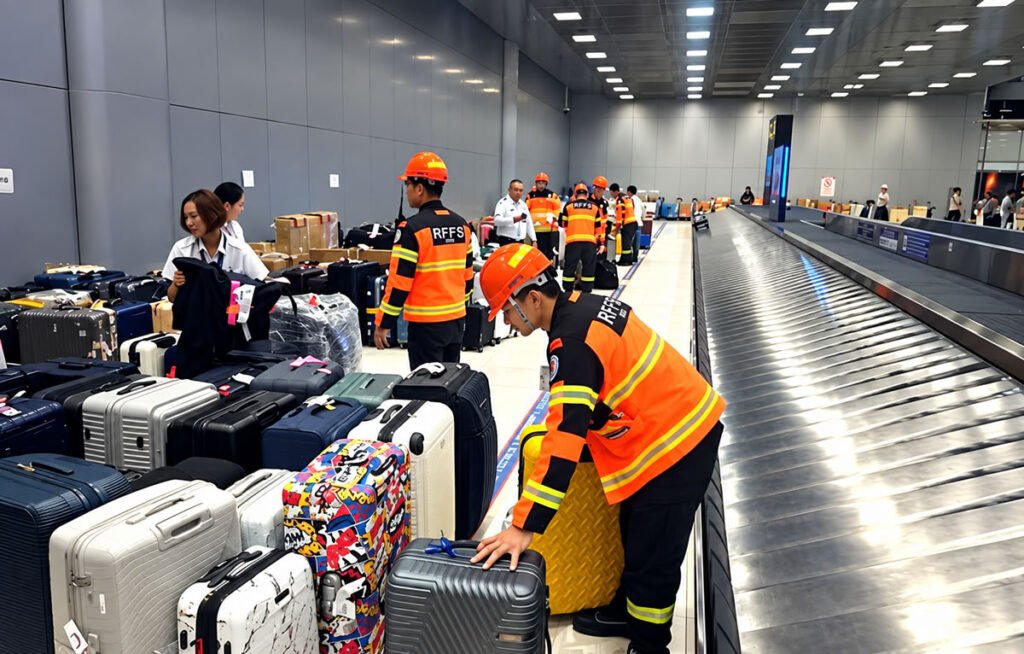
This led to a large baggage backlog: luggage from 52 flights operated on September 26–27 remained stranded. Around 5,000–5,600 bags were still at the airport as of September 29.
Thai Airways CEO Chai Eamsiri apologised to passengers, stating the airline is making every effort to clear the backlog within 72 hours. The airline has partnered with Thai Post for home delivery of luggage and is using QR-code registration systems.
69 Royal Thai Air Force personnel were deployed to assist with sorting and moving bags. Additional military and airline staff have also been assigned to help.
Thai Airways reported that nearly all flights were delayed over the previous two days (fewer than 3% on schedule). On September 28 alone, 34 flights were delayed.
The airline has cancelled multiple domestic and international flights for September 29–30 due to the flooding and aircraft rotation issues. Affected routes include services to Singapore, New Delhi, Kuala Lumpur, Frankfurt, Munich, Brussels, Phuket, Hanoi, Udon Thani, and Khon Kaen.
CEO Chai Eamsiri indicated that departures from Bangkok would be reduced by about 30% for at least three days to stabilise operations.