

India has no shortage of famous holiday destinations, from Goa and Manali to Jaipur and Kerala. But some of the country’s most memorable travel experiences are found away from the usual tourist circuit.
From remote Himalayan valleys and ancient rock carvings to river islands, tribal landscapes and coral-fringed beaches, these lesser-known destinations reveal a quieter and more distinctive side of India.
If you’re looking for a journey that feels different from a standard vacation, these 12 places deserve a spot on your travel list.
1. Ziro Valley, Arunachal Pradesh — Where Mountains Meet Apatani Culture
Surrounded by pine-covered hills and expansive rice fields, Ziro Valley offers a peaceful introduction to Arunachal Pradesh. The region is particularly known for the Apatani community, whose traditional villages and distinctive cultural practices add to the valley’s character.
The landscape is especially attractive during the greener months, while the annual Ziro Music Festival brings a completely different energy to the region.
Best time: March to October
Getting there: Reach the Itanagar region by air and continue by road to Ziro. Rail-and-road combinations are also possible.
Don’t miss: Apatani villages, rice fields, pine forests and local cultural experiences.
Travel note: Check the latest Arunachal Pradesh entry-permit rules and road conditions before travelling.
2. Majuli, Assam — Life on the Brahmaputra

Floating within the Brahmaputra landscape, Majuli offers travellers an opportunity to slow down and experience rural Assam. The island is closely associated with Assamese Vaishnavite culture, traditional satras, handicrafts and village life.
Instead of rushing between attractions, Majuli is best experienced at a relaxed pace—cycling through villages, visiting cultural centres and watching everyday island life unfold.
Best time: October to March
Getting there: Travel to Jorhat and continue to Nimati Ghat for the ferry to Majuli.
Don’t miss: Auniati Satra, Kamalabari Satra, villages and traditional crafts.
Travel note: Keep your schedule flexible because ferry operations can change with river conditions.
3. Kongthong, Meghalaya — The Village of Musical Names

Hidden among Meghalaya’s green hills, Kongthong is famous for a fascinating naming tradition. Members of the local Khasi community are traditionally associated with distinctive melodic tunes used alongside their given names.
The journey here is as much about experiencing village culture and the surrounding landscape as it is about seeing a particular monument.
Best time: October to May
Getting there: Shillong is the usual starting point, followed by a road journey to Kongthong.
Don’t miss: The village, surrounding Khasi hills and forest scenery.
Travel note: Respect community customs and ask permission before photographing residents or private spaces.
4. Unakoti, Tripura — A Hillside Filled With Ancient Stone Art

Deep in Tripura lies Unakoti, an extraordinary archaeological and religious site covered with enormous rock-cut figures. The massive Shiva imagery carved into the hillside gives the location an almost surreal atmosphere.
Unlike India’s better-known temple complexes, Unakoti combines forest scenery, mythology and monumental stone art in a setting that remains relatively quiet.
Best time: October to April
Getting there: Travel from Agartala towards Kailashahar and continue to Unakoti by road.
Don’t miss: The giant rock sculptures, Shiva carvings and surrounding forested landscape.
Travel note: Comfortable footwear is useful because the site involves walking across uneven terrain.
5. Velas, Maharashtra — A Quiet Konkan Coast With a Conservation Story

For a different kind of coastal experience, head to Velas in Maharashtra’s Konkan region. The village is widely associated with Olive Ridley turtle conservation and attracts visitors during the nesting and hatchling season.
Beyond the turtles, Velas offers a slower coastal experience, with beaches, village surroundings and nearby historical attractions.
Best time: March to April for turtle-hatching experiences
Getting there: Velas is accessible by road from Mumbai or Pune, with local transport needed for the final stretches.
Don’t miss: Velas Beach, Bankot Fort and nearby coastal attractions.
Travel note: Wildlife sightings are never guaranteed. Follow conservation guidelines and maintain a safe distance from turtles and hatchlings.
6. Gokarna, Karnataka — Beaches Without the Big-Resort Feel
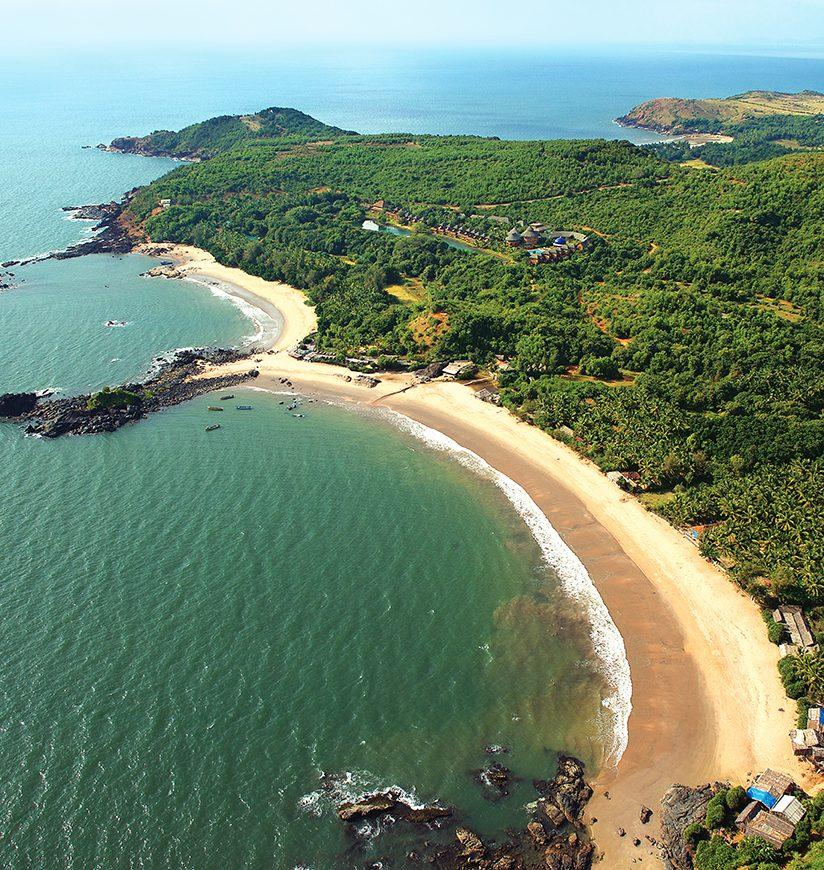
Although Gokarna is becoming increasingly popular, it still offers a more laid-back alternative to some of India’s busier beach destinations.
Its appeal comes from the combination of Arabian Sea beaches, temple traditions and scenic coastal trails. Om Beach, Kudle Beach and Half Moon Beach each offer a different atmosphere.
Best time: October to March
Getting there: Gokarna is accessible by both road and rail, with connections to several cities in Karnataka and neighbouring Goa.
Don’t miss: Om Beach, Kudle Beach, Half Moon Beach and Mahabaleshwar Temple.
Travel note: Some coastal trails can be steep, so carry water and wear comfortable walking shoes.
7. St. Mary’s Islands, Karnataka — India’s Unusual Basalt Coast

Just off the coast of Malpe near Udupi, St. Mary’s Islands are known for their striking columns of hexagonal basalt. The unusual rock formations give the shoreline an appearance unlike most Indian beaches.
The islands are best suited for a short excursion rather than a conventional beach holiday.
Best time: October to January, depending on boat operations
Getting there: Reach Malpe and take an authorised boat service when operations are available.
Don’t miss: The basalt formations and Arabian Sea views.
Travel note: Check boat availability before travelling and leave the natural landscape untouched.
8. Gurez Valley, Kashmir — A Quieter Himalayan Retreat

Far from the crowds of Kashmir’s most famous tourist spots, Gurez Valley offers dramatic mountains, green meadows, rivers and traditional settlements.
The village of Dawar serves as an important base for exploring the valley, while the surrounding Himalayan scenery makes the region particularly attractive to photographers and travellers looking for a slower mountain escape.
Best time: June to September
Getting there: The usual route is from Srinagar through Bandipora and onward by road.
Don’t miss: Dawar, the Kishanganga River, Razdan Pass and surrounding mountain landscapes.
Travel note: Road access can depend on weather and local conditions, so check current advisories before setting out.
9. Zanskar, Ladakh — Into India’s High-Altitude Wilderness

For travellers who want something more adventurous, Zanskar delivers enormous landscapes and a sense of remoteness that is increasingly difficult to find elsewhere.
Monasteries, high mountain passes, isolated villages and dramatic glaciers form the backdrop to a journey through this rugged Himalayan region.
Best time: July to September for many road journeys
Getting there: Routes can approach Zanskar from Kargil or via the Darcha–Padum corridor, depending on conditions.
Don’t miss: Padum, Phugtal Monastery, Drang Drung Glacier and Pensi La.
Travel note: High altitude demands patience. Acclimatise properly and allow extra time for changing road and weather conditions.
10. Bastar, Chhattisgarh — Forests, Waterfalls and Indigenous Heritage

Bastar offers a completely different travel experience, combining dense forests, waterfalls, caves, handicrafts and indigenous traditions.
Jagdalpur is a convenient base for exploring the region, while places such as Chitrakote Falls and Kanger Valley National Park showcase Bastar’s natural beauty.
Best time: October to February
Getting there: Jagdalpur can be reached by road and rail, with air connectivity depending on current services.
Don’t miss: Chitrakote Falls, Tirathgarh Falls, Kanger Valley and local handicraft markets.
Travel note: Use local guides for forest excursions and check current local advisories before visiting remote areas.
11. Mon, Nagaland — Discovering Konyak Country

In northeastern Nagaland, Mon district offers an opportunity to explore the heritage of the Konyak Naga community. Traditional villages, distinctive architecture and surrounding hills make this one of the country’s more unusual cultural journeys.
Longwa is among the best-known places in the region, but the broader experience comes from meeting local communities and understanding their traditions.
Best time: November to April
Getting there: Dibrugarh or Jorhat can be used as gateways before continuing by road.
Don’t miss: Longwa, Shangnyu and surrounding villages.
Travel note: Arrange the required Nagaland entry documentation in advance and follow local customs when visiting villages.
12. Lakshadweep — India’s Tropical World of Lagoons and Reefs

If mountains and forests aren’t your idea of an offbeat escape, Lakshadweep offers an entirely different landscape. Turquoise lagoons, coral reefs, sandy beaches and small-island communities create an experience far removed from India’s mainland tourist circuits.
Agatti, Bangaram, Kadmat and Minicoy are among the islands associated with tourism, subject to applicable permissions and access rules.
Best time: October to February
Getting there: Kochi is the principal mainland gateway, with air and ship connections available depending on the island and current schedules. Agatti has an airport.
Don’t miss: Lagoons, beaches, reef experiences and island culture.
Travel note: Visitors need the appropriate entry permission. Check current island-specific tourism rules before booking and take extra care to protect the fragile marine environment.
How to Travel Responsibly Through Offbeat India
The appeal of these destinations lies partly in the fact that they haven’t been transformed by mass tourism. That also means travellers need to be more prepared.
- Research permits before departure: Some regions have special entry requirements.
- Build flexibility into your itinerary: Ferries, mountain roads and local transport can be affected by weather.
- Carry some cash: Remote areas may have limited ATM or digital-payment access.
- Respect local traditions: Ask before photographing people, homes, ceremonies or cultural activities.
- Prepare for weak connectivity: Download maps and keep important information available offline.
- Pack according to the terrain: Good walking shoes are essential for many mountain, forest and coastal destinations.
- Leave no trace: Avoid single-use plastic and never take away coral, rocks, shells or other natural materials.
- Support local communities: Stay at locally operated properties, hire local guides and purchase authentic regional crafts where possible.
The India Beyond the Postcard
India’s most rewarding journeys aren’t always the ones with the biggest crowds or the most recognisable landmarks. Sometimes, the best travel memories come from a quiet Himalayan village, a ferry ride across a great river, an unexpected rock formation or a conversation with a local community.
These 12 destinations offer exactly that—a chance to slow down, explore deeper and see a side of India that conventional tourist itineraries often miss.