
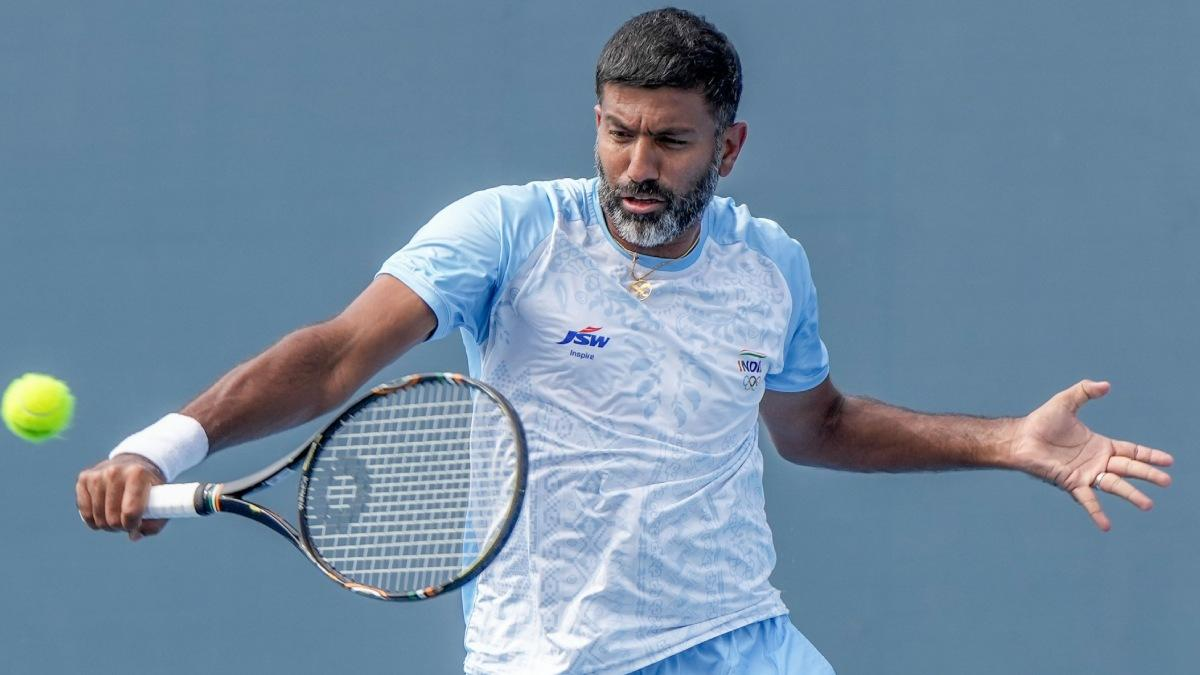
A selection controversy has emerged around India’s tennis squad for the 2026 Asian Games, with former world No. 1 doubles player Rohan Bopanna questioning the decision to leave five players out of the final contingent.
Bopanna, a two-time Asian Games gold medallist, has criticised the revised selection process after the Sports Ministry’s criteria resulted in changes to the tennis squad originally proposed by the All India Tennis Association (AITA).
The dispute has put the spotlight on a broader question in Indian sport: should international rankings and performances determine selection, or should medal-potential criteria take priority?
Five Players Caught in the Selection Dispute
The five players at the centre of the controversy are Manas Dhamne, Vaishnavi Adkar, Sahaja Yamalapalli, Vaidehee Chaudhari and Prarthana Thombare. Their names were included in AITA’s earlier representation list, but the final squad was altered after the Sports Ministry applied its selection criteria.
The change has been particularly significant for women’s singles. According to reports, Sahaja Yamalapalli, India’s highest-ranked women’s singles player in the affected group, was among those removed from the final representation list.
Bopanna Challenges the Logic Behind the Rules

Bopanna’s criticism centres on the role of rankings in the selection process.
The veteran argued that athletes who competed internationally and earned their rankings should be given the opportunity to represent the country. He questioned the purpose of maintaining ranking and qualification systems if players can subsequently be excluded because a selection committee does not consider them strong medal prospects.
His comments have added considerable weight to the debate because Bopanna has himself represented India at major international events and won two Asian Games gold medals.
What Changed in India’s Asian Games Squad?
The Sports Ministry’s approach is linked to a policy that prioritises athletes considered realistic medal contenders, including a ranking-based requirement for tennis players. The application of those criteria reduced the tennis representation from the broader list initially submitted by AITA.
The final men’s singles lineup includes Sumit Nagal, Manas Dhamne and Dhakshineswar Suresh, while Yuki Bhambri, N Sriram Balaji and Anirudh Chandrasekar are named for men’s doubles.
In the women’s competition, Sahaja Yamalapalli, Vaishnavi Adkar and Vaidehi Chaudhari are listed in the final squad, alongside doubles players including Rutuja Bhosale, Prarthana Thombare and Ankita Raina.
However, reports indicate that the representation and final approval process has created confusion over which players were originally proposed and which names were ultimately retained or removed. The controversy has therefore become as much about the selection process as the final list itself.
Why Rankings Have Become the Central Issue
For professional tennis players, rankings are built through results accumulated across international tournaments. Improving a ranking can require years of competition, travel, coaching and financial investment.
That is why Bopanna’s criticism goes beyond the five athletes directly affected. He has also pointed to the role of families and sponsors who support players while they attempt to establish themselves internationally.
The debate raises an important issue for India’s developing sporting ecosystem: athletes need clear expectations about how performances translate into opportunities to represent the country.
Asian Games Opportunity Comes Under the Spotlight
The Aichi-Nagoya Asian Games begin on September 19, 2026, giving the selection controversy an immediate sporting context. Tennis has historically been an important medal-producing sport for India at the Asian Games, making team selection particularly significant.
For the players involved, an Asian Games appearance would have provided valuable international experience as well as an opportunity to compete for medals against leading players from across the continent.
For Indian tennis officials, the challenge now is to ensure that selection decisions are clearly understood by athletes and the wider sporting community.
A Bigger Debate for Indian Sport
The Bopanna controversy highlights a difficult balance faced by national sports administrators.
A medal-focused policy is designed to maximise India’s chances at a major multi-sport event. But athletes and supporters can understandably question the system when players who have achieved strong international results are subsequently excluded.
The debate is unlikely to disappear with the announcement of the final tennis squad. Instead, it could encourage a broader discussion about how India selects athletes for major competitions and how much weight should be given to rankings, recent form, qualification and projected medal chances.
With the Asian Games approaching, India’s tennis players will now prepare for the competition under the final selection framework. But Bopanna’s intervention has ensured that the conversation around how those selections are made will remain firmly in the spotlight.