
New Delhi, September 19, 2026 – Supreme Court Justice Ujjal Bhuyan has called for special attention to frivolous criminal litigation, urging trial courts to launch a drive to weed out such cases and proposing a one-time amnesty for non-serious matters.
Speaking at the 4th Discourse on “Ethics in Criminal Litigation and the Duties of the Defence and the Prosecution,” organised by the Centre for Discourses on Criminal and Constitutional Jurisprudence at the India International Centre, Justice Bhuyan criticised the growing number of criminal cases that, in his view, should never enter the justice system.
He pointed to prosecutions registered against people for consuming a particular kind of food, reciting poems, raising slogans seeking bail for others, participating in demonstrations, commenting on social media, performing stand-up comedy, and even over the content or titles of films and books.
“The accusations are ridiculous and often border on an affront to one’s intelligence. Nonetheless, registration of such criminal cases continues unabated. Not only that, in some cases chargesheets are also filed, leading to trial knowing fully well what would be the outcome,” he said.
Burden on the System
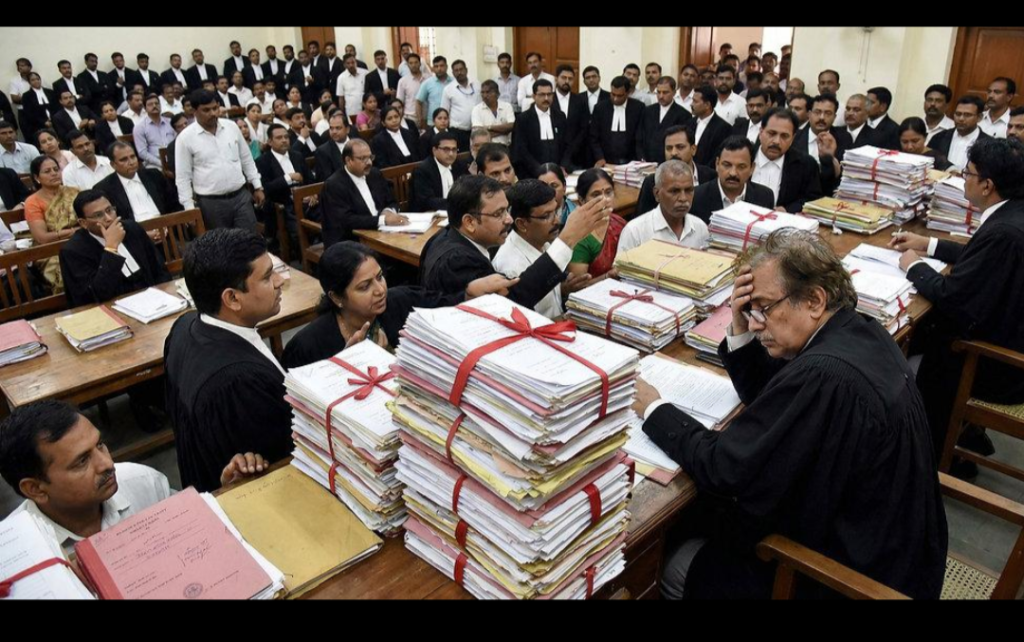
Citing data from the National Judicial Data Grid (as of September 17, 2026), Justice Bhuyan noted that more than 4.27 crore criminal cases are pending across Indian courts. Of these, approximately 95% (around 4.07 crore) are before the trial courts.
“When you have so many cases clogging the court system, with the system unable to cope with it, as if almost bursting at the seams, superimposition of such frivolous cases is only adding to the unworkable burden on the trial courts,” he observed.
He said these cases make the Indian justice system “an object of ridicule before the liberal democratic world” and called for urgent action.
Proposed Solutions
Justice Bhuyan recommended that trial courts launch a special drive to clear frivolous litigation. He also suggested a one-time amnesty across the board for non-serious (non-sessions) criminal cases so that courts can concentrate on matters that truly require judicial attention.
The judge additionally referred to concerns over custodial violence and alleged encounter killings, stating that he was being forced to reconsider the earlier belief that such practices had substantially receded after landmark judicial interventions.
His remarks form part of a broader discussion on ethics in criminal litigation, the roles of the prosecution and defence, and the need to reduce unnecessary burden on an overstretched criminal justice system.