
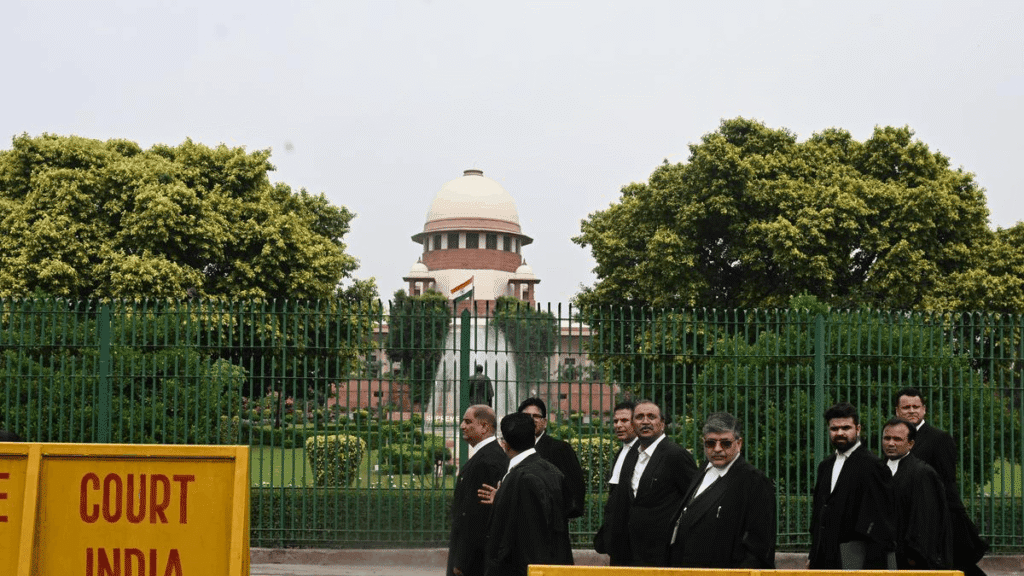
The Supreme Court is scheduled to hear contempt petitions on November 27 over the controversy surrounding the lighting of the Karthigai Deepam lamp at Thirupparankundram hill in Madurai, Tamil Nadu. The petitions concern the alleged failure of state and district authorities to implement the court’s November 20 order permitting the ceremonial lamp to be lit at a disputed stone pillar on the hill.
The controversy has drawn attention to the responsibilities of government officials in implementing judicial directions, while also raising questions about religious traditions, temple administration and public order.
Supreme Court Directs One-Time Lamp-Lighting Arrangement
On November 20, a Supreme Court bench comprising Justices Aravind Kumar and Vipul M. Pancholi permitted a limited, one-time arrangement for lighting the Karthigai Deepam at the Deepathoon, a stone pillar located on Thirupparankundram hill.
The permission was specifically granted for November 24, coinciding with the festival. The court directed that only an authorised team from the temple administration could perform the ritual, with the district administration responsible for coordinating security and other arrangements.
The bench also clarified that the temporary permission would not establish any permanent religious, customary or ownership rights over the disputed location.
Dispute Continues After Lamp Is Lit at Traditional Location
Despite the Supreme Court’s directions, the lamp was not lit at the disputed Deepathoon on November 24. Instead, the ritual took place at the customary Deepa Mandapam near the Uchipillaiyar Temple on the hill.
The temple’s board of trustees maintained that the traditional practice was to light the Karthigai Deepam at this established location. Its resolution referred to longstanding religious customs, Agama traditions and the views of temple functionaries.
The Deepathoon is situated close to a Muslim dargah, making the location particularly sensitive amid the wider dispute over religious practices and access to the hill.
Madurai Collector Explains Why Supreme Court Order Was Not Implemented
Madurai District Collector Nishant Krishna submitted a report to the Supreme Court explaining the steps taken by the district administration before the festival.
He stated that repeated efforts were made to obtain authorisation from the temple administration for lighting the lamp at the Deepathoon. However, the temple’s board of trustees ultimately decided to conduct the ceremony at its customary location.
The Collector maintained that the administration could not independently authorise individuals to perform the ritual when the Supreme Court’s directions specifically required authorisation from the Devasthanam.
He also apologised for the lamp not being lit at the disputed pillar and denied any wilful or deliberate disobedience of the court’s order.
Contempt Petitions Seek Action Against Officials
Following the failure to light the lamp at the Deepathoon, petitions seeking contempt proceedings were filed before the Supreme Court.
The petitioners have alleged that the authorities failed to implement the November 20 directions despite having sufficient time to make arrangements. They have questioned the role of the state government and district officials in the developments surrounding the festival.
One petition has also sought clarification on whether the Tamil Nadu Chief Minister or any ministers issued instructions that prevented implementation of the court’s order.
The Supreme Court had earlier declined to initiate contempt proceedings on its own and asked the petitioners to file formal applications. The matter is now scheduled for consideration on November 27.
Religious Traditions and Public Order Remain at the Centre
The Thirupparankundram dispute has developed into a broader discussion involving religious observances, established temple practices, judicial authority and public safety.
The Supreme Court’s earlier order included safeguards concerning access to the hill, protection of the archaeological site and the need to maintain peace between communities. It also clarified that the temporary arrangement should not interfere with the functioning of the nearby dargah.
The court has not yet made a final determination on the competing claims regarding the disputed pillar or the customary right to light the lamp there.
November 27 Hearing Could Determine the Next Legal Steps
The upcoming hearing is expected to bring renewed attention to the actions of the district administration and the temple authorities following the Supreme Court’s November 20 directions.
The bench will consider the contempt pleas and the explanations placed before it. The proceedings could have important implications for how judicial orders involving religious observances and sensitive public spaces are implemented.
The larger dispute, however, remains unresolved, with questions concerning religious customs, access and rights over the disputed location still awaiting further judicial consideration.