
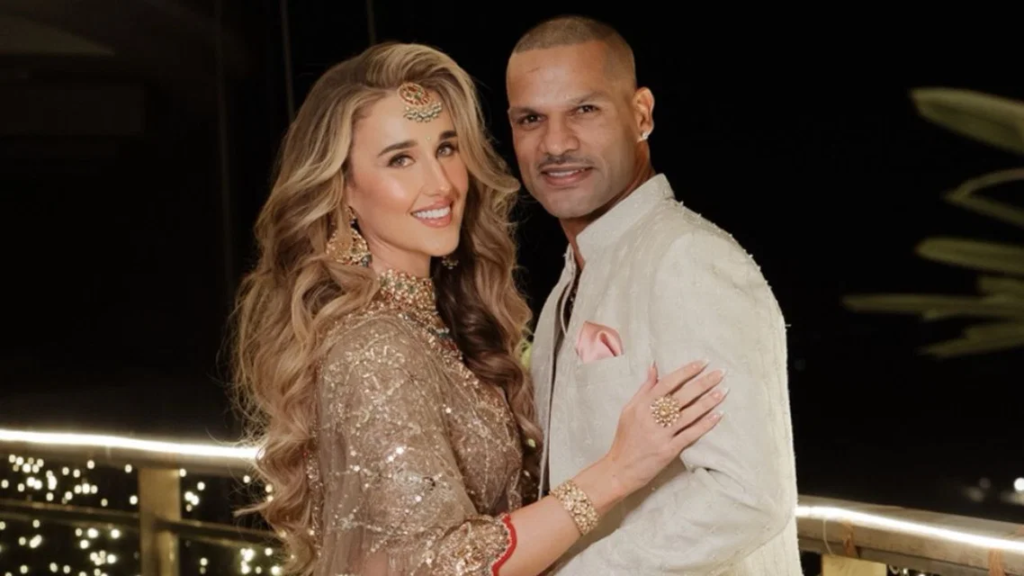
Former Indian cricketer Shikhar Dhawan and his Irish wife Sophie Shine have offered an interesting perspective on intercultural marriages, explaining how openness, communication and mutual understanding helped them navigate differences in their backgrounds.
The couple recently spoke about their wedding and relationship during an interaction with Curly Tales. Their experiences have highlighted an important aspect of modern relationships: successful marriages do not necessarily require partners to share the same culture, religion or upbringing. Instead, respect and compatibility often play a more significant role.
Sophie Shine Wanted an Indian Wedding With a Personal Touch
Speaking about their wedding, Sophie revealed that she initially wanted a grand Indian celebration. However, as the preparations progressed, she began preferring a more intimate ceremony.
Coming from an Irish background, she also wanted a priest from her own religion to bless the couple. Once this personal wish was fulfilled, she was happy to embrace Indian wedding traditions and customs.
Sophie explained that their different cultural backgrounds did not create major difficulties because both partners were open to understanding each other.
Their wedding experience demonstrated how couples can respect individual beliefs while creating new traditions together.
Shikhar Dhawan Says Compatibility Depends on Shared Values
Dhawan explained that compatibility was one of the most important considerations in their relationship.
According to him, partners should understand each other’s values rather than attempt to change one another. He believes that a relationship becomes difficult when one person constantly expects the other to adjust their personality or beliefs.
The former cricketer also highlighted the importance of spending time together before marriage. Sophie similarly explained that living together helped them understand their everyday habits and how comfortably they could manage a shared household.
Their views underline the importance of understanding practical compatibility beyond romantic attraction.
Why Cultural Differences Do Not Always Affect Marriage
Relationship experts suggest that differences in culture, language and religion do not automatically create problems in a marriage.
Psychotherapist and relationship coach Delnna Rrajesh explained that difficulties often emerge when one partner feels that their identity, beliefs and personal needs are consistently given less importance.
Cultural traditions are frequently connected with childhood memories, family relationships and personal identity. Dismissing these traditions can make someone feel that an important part of their personality is being rejected.
A healthy relationship allows both partners to maintain their individual identities while developing shared values and responsibilities.
The Difference Between Compromise and Losing Your Identity
Adjustment is an essential part of married life, but experts warn against situations in which compromise becomes a one-sided responsibility.
For example, one partner might move to another country, learn a new language, adapt to unfamiliar customs and adjust to a different family environment. If the other partner makes little effort to accommodate these changes, resentment and emotional distance may gradually develop.
According to relationship expert Delnna, the problem is not necessarily the adjustment itself but the lack of recognition and support for the person making those sacrifices.
Healthy compromise requires effort from both individuals. Neither partner should feel pressured to abandon their identity to maintain the relationship.
Family Expectations Can Become a Challenge in Intercultural Marriages
Intercultural relationships often involve additional expectations from both families.
Parents may have concerns about religious practices, traditional celebrations, family customs and how children will be raised. Such concerns can sometimes emerge from unfamiliarity with another culture or fear of losing established family connections.
Experts recommend that couples discuss important subjects before marriage, including religious beliefs, festivals, parenting responsibilities, family involvement and personal boundaries.
It is equally important for partners to support one another when disagreements with relatives arise.
A successful marriage should provide space for both families and cultural backgrounds without allowing outside expectations to dominate the couple’s decisions.
Shared Values Are More Important Than Similar Backgrounds
Two people raised in the same culture may still have very different expectations about finances, parenting, independence and family responsibilities.
On the other hand, partners from different countries and religious backgrounds can build a strong relationship when they share values such as honesty, loyalty, compassion and mutual respect.
The real measure of compatibility appears when disagreements occur. Couples need to communicate without disrespecting each other and make decisions without treating every difference as a personal conflict.
Shikhar and Sophie’s experience offers an example of how openness and consideration can help partners navigate cultural differences.
Conclusion
Shikhar Dhawan and Sophie Shine’s intercultural marriage highlights how modern relationships are increasingly shaped by understanding rather than traditional expectations.
Their approach to wedding customs, religious beliefs and everyday compatibility demonstrates the importance of respecting each other’s individuality.
Ultimately, a successful marriage does not depend on having identical backgrounds. It depends on whether two people can communicate honestly, share responsibilities and create a future in which both feel equally respected.