
India’s growing private space sector has achieved a significant milestone with Bengaluru-based companies GalaxEye and Bellatrix Aerospace signing a multi-year agreement to develop propulsion systems for 30 upcoming satellites.
The partnership marks the largest business-to-business order between two Indian private space companies by satellite count since private participation in the country’s space industry expanded in 2020. Under the agreement, Bellatrix will design and supply its locally developed Arka Hall-effect propulsion systems for GalaxEye’s next-generation Drishti Gen-II satellite constellation.
The deal was announced at the 5th India International Space Conclave in New Delhi on November 24, 2026.
1. Bellatrix to Supply Propulsion Systems for 30 Satellites
Under the agreement, Bellatrix Aerospace will manufacture, test and deliver propulsion units for GalaxEye’s planned 30-satellite network.
The Arka Hall-effect propulsion system uses electricity to accelerate charged particles, generating thrust that allows satellites to adjust their positions in orbit. Unlike conventional chemical propulsion, electric propulsion can offer greater fuel efficiency, making it useful for satellites expected to operate over several years.
The systems will help GalaxEye position its satellites, maintain their orbital spacing, avoid potential collisions and manage their movement at the end of their operational lives.
2. Why Satellite Propulsion Is Important
Satellites need more than a successful launch to complete their missions. Once they reach space, they must maintain their assigned orbits and make adjustments when required.
For a constellation of 30 satellites, maintaining the correct distance and formation is particularly important. It helps ensure that the spacecraft can follow planned observation schedules and repeatedly capture images of specific locations on Earth.
Electric propulsion systems can support these operations while reducing the amount of fuel satellites need to carry.
3. What Is GalaxEye’s Drishti Satellite Project?
GalaxEye is developing an Earth-observation satellite network called Drishti. Its technology, known as OptoSAR, combines optical imaging with Synthetic Aperture Radar (SAR).
Traditional optical satellites capture images using reflected light, but their observations can be affected by darkness, clouds and certain weather conditions. SAR technology uses radar signals and can collect information even at night and through cloud cover.
By combining these two technologies, GalaxEye aims to provide more consistent and detailed information about the Earth’s surface.
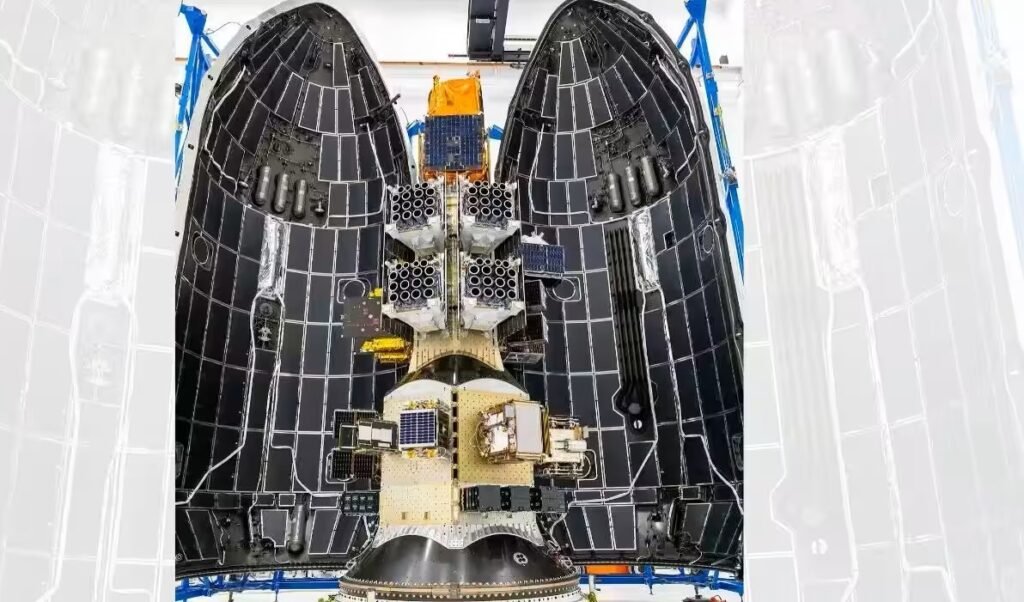
The company’s first satellite, Mission Drishti, was launched aboard a SpaceX Falcon 9 rocket on May 3, 2026. It demonstrated the company’s approach to combining optical and radar imaging in orbit. However, communication with the spacecraft was subsequently lost following a geomagnetic storm.
4. Bellatrix Has Already Tested Its Technology in Space
Bellatrix Aerospace has been developing propulsion technologies for small satellites and other spacecraft.
Its Arka and Rudra propulsion systems underwent in-orbit testing aboard ISRO’s PSLV-C58 mission in January 2024. The Rudra system was also tested during the PSLV-C60 mission in January 2025.
These demonstrations have helped establish the company’s experience in developing propulsion hardware for space applications.
The new agreement gives Bellatrix an opportunity to supply its technology at a larger commercial scale while supporting another Indian company’s satellite programme.
5. A Major Step Towards Indigenous Space Technology
The partnership reflects the growing importance of domestic supply chains in India’s private space industry. Instead of depending entirely on overseas suppliers for critical satellite components, Indian companies are increasingly working together to develop and manufacture advanced technologies within the country.
GalaxEye’s decision to source propulsion systems from Bellatrix also strengthens collaboration between two Bengaluru-based deep-tech companies.
The Indian government has been encouraging private investment and innovation in the space sector through policy reforms and the establishment of IN-SPACe. India has also set an ambition to develop a $44 billion space economy by 2033.
6. What the Partnership Could Mean for India’s Space Future
The agreement is significant not only because it involves 30 satellites but also because it demonstrates the potential of Indian companies to support one another across different stages of space missions.
GalaxEye is concentrating on advanced Earth-observation technology, while Bellatrix is developing the propulsion systems required to operate satellites efficiently in orbit.
If the planned constellation progresses successfully, it could strengthen India’s capabilities in satellite-based observation and create opportunities in areas such as agriculture, infrastructure monitoring, defence and disaster management.
The partnership represents another important development in India’s transition towards a more commercially driven space ecosystem, where private companies are increasingly building complete technologies and supplying critical systems for one another’s missions.