
Apple is making a significant change to the teams behind some of its most ambitious technologies, cutting more than 200 positions across its Siri, Vision Pro and related software groups as the company redirects resources toward artificial intelligence and future devices.
The restructuring offers a glimpse into Apple’s changing technology priorities. Rather than simply expanding every emerging product area, the company appears to be concentrating its engineering resources on technologies it sees as having greater long-term potential.
More Than 200 Roles Affected
According to reports, roughly 100 positions are being eliminated from the Vision Pro organisation, while another 100 or so are being cut across Siri and related software teams. Apple’s Intelligent Systems Experience group, which works on AI capabilities across its devices, is also affected.
Apple has said the restructuring will also create new positions and that affected employees will have opportunities to apply for other roles within the company. The company described the changes as part of an effort to evolve its business and deliver better experiences for users.
Vision Pro’s Gaming Push Is Being Scaled Back
One of the most notable changes involves Apple’s Vision Pro mixed-reality headset.
Apple is reportedly largely shutting down a team dedicated to developing gaming features for the headset. The company is also reducing the size of its team producing immersive video content.
This does not mean Vision Pro or its visionOS software is being discontinued. Instead, Apple appears to be changing how it invests in the platform.
The company plans to produce fewer immersive videos internally while encouraging outside creators to develop content for the headset.
Why Vision Pro Is Being Reassessed
The Vision Pro arrived in 2024 as Apple’s major entry into spatial computing, but its premium price and limited adoption have made it difficult to turn the headset into a mainstream consumer product.
Producing specialised immersive content is also expensive. With a relatively small user base, creating large amounts of exclusive content can be difficult to justify commercially.
Apple therefore appears to be moving away from some of the areas that have not generated the expected momentum and toward products that could eventually reach a much larger audience.
Siri Is Undergoing a Different Kind of Transformation
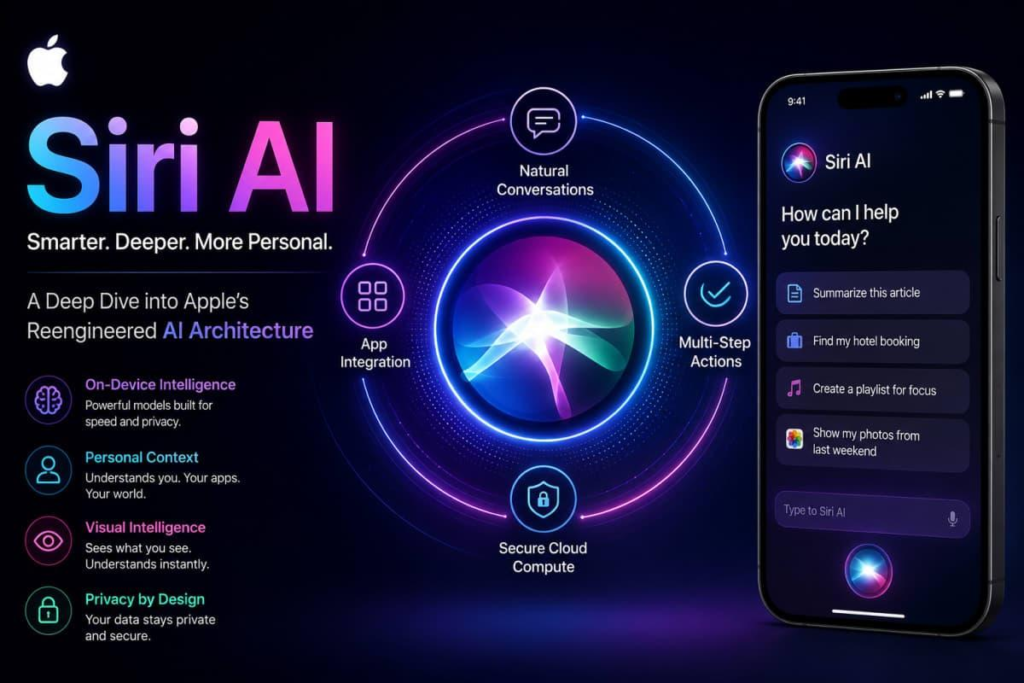
The changes affecting Siri are more closely connected to Apple’s AI strategy.
Apple is rebuilding Siri around a newer technical architecture designed to support a more capable, AI-powered assistant. That shift requires different engineering expertise, prompting the company to eliminate some existing positions while reallocating resources and creating new roles.
The change reflects a wider transformation taking place across the technology industry: traditional voice assistants are increasingly being redesigned around generative and conversational AI.
For Apple, improving Siri has become particularly important as competitors push more advanced AI assistants and on-device intelligence.
AI Is Becoming a Bigger Priority
Apple’s Intelligent Systems Experience team is also part of the restructuring. The group works on AI-related capabilities across products such as the iPhone, iPad and Mac.
Instead of treating AI as a separate feature, Apple is increasingly integrating it into applications, operating systems and device experiences.
That means the company needs engineers with expertise in newer AI architectures, machine learning and software systems.
The latest changes appear to be designed to align Apple’s workforce with those priorities.
Smart Glasses Could Be the Next Big Bet
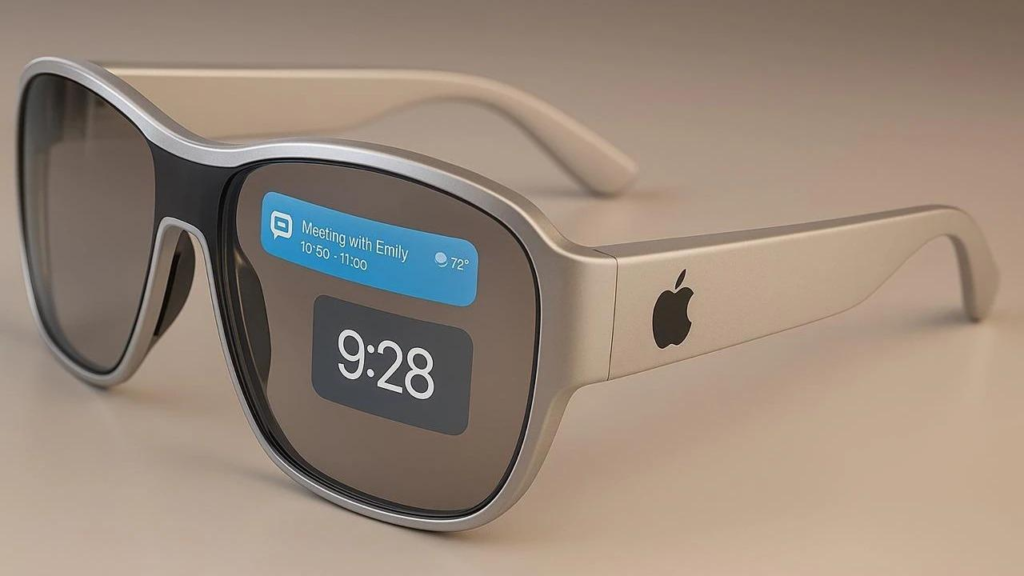
Perhaps the most interesting part of Apple’s strategy is what may come next.
Reports indicate that Apple is increasingly interested in smart glasses, following the growing popularity of lightweight wearable devices in the market. Unlike Vision Pro, smart glasses could be smaller, lighter and easier for consumers to wear throughout the day.
This would represent a significant change in Apple’s approach to spatial computing.
Instead of asking consumers to wear a large headset for specialised experiences, the company could eventually focus on a device designed to blend more naturally into everyday life.
Vision Pro Isn’t Completely Out of the Picture
Despite the cuts, Apple has not abandoned the Vision Pro platform.
Reports indicate that the company continues to consider future Vision Pro hardware, including a next-generation model that could arrive later in the decade.
The immediate strategy, however, appears to be more selective. Apple is reducing investment in areas such as gaming and internally produced immersive content while keeping the broader platform alive.
What Apple’s Restructuring Says About Big Tech
Apple’s latest moves highlight an important reality of the technology industry: even the world’s biggest technology companies cannot invest equally in every emerging technology.
As AI becomes increasingly important, companies are reassessing projects, teams and products to determine where future growth is most likely to come from.
For Apple, that appears to mean putting greater emphasis on AI-powered software, a redesigned Siri experience and new wearable devices, while taking a more cautious approach to Vision Pro.
The more than 200 job cuts are therefore not simply a story about layoffs. They offer a snapshot of Apple’s changing technology roadmap—and a sign that the company may be preparing for a future where AI and lightweight wearable computing play a much bigger role than today’s mixed-reality headsets.