
Starting strength training can feel confusing. There are machines, dumbbells, resistance bands, exercise videos and plenty of conflicting advice. But the basics are straightforward: use resistance to challenge your muscles, practise good technique and increase the challenge gradually as you become stronger.
You do not need a gym membership or advanced fitness experience to begin.
Why include strength training?
Strength training helps the body do more than lift heavy objects. It can support muscle strength, bone health, balance and easier everyday movement. Carrying bags, getting up from a chair, climbing stairs and maintaining posture all rely on muscular strength.
Regular resistance exercise can also complement cardio. Walking, cycling and swimming support heart health and endurance, while strength training helps maintain muscles and physical function.
Resistance can take many forms
A workout does not need complicated equipment. You can begin with:
- Body weight: chair squats, wall push-ups, planks and lunges
- Resistance bands: portable bands that become harder to stretch
- Free weights: dumbbells, kettlebells or suitable household items
- Gym machines: useful for guided, stable resistance
- Suspension equipment: straps that use your own body weight
Choose the option that feels accessible and safe for you.
Learn the basic language
A repetition, often called a rep, is one complete movement—for example, lowering and raising yourself once during a squat.
A set is a group of repetitions completed in a row. If you perform 10 squats, rest, and then perform another 10, you have completed two sets of 10 repetitions.
These terms are helpful, but do not let them make exercise feel overly technical. For beginners, controlled movement and regular practice matter most.
Build your first routine
Aim to train the major muscle groups at least twice each week, with a rest day between sessions that work the same muscles. A short whole-body session is an effective place to start.
Before exercising, warm up with five to ten minutes of light activity, such as walking in place, easy cycling or gentle mobility movements.
A simple session might include:
- Chair squats for the legs
- Wall or incline push-ups for the chest and arms
- Band rows for the upper back
- Glute bridges or step-ups for the lower body
- A plank variation for the core
Start with one set of each exercise. Choose a resistance level that makes the final few repetitions feel challenging while still allowing steady, controlled form. As you gain confidence, add another set, a few repetitions or slightly more resistance.
Form is more important than heavy weight
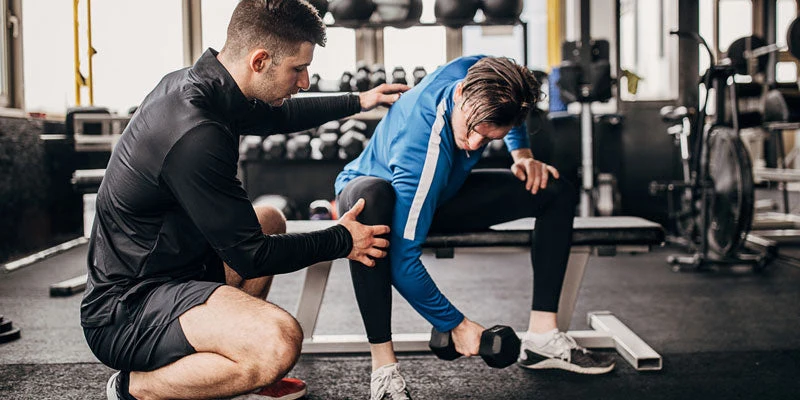
Do not rush to lift the heaviest weight available. Begin with a manageable resistance and move with control. Maintain a stable posture, avoid using momentum and breathe steadily rather than holding your breath.
If an exercise causes sharp pain, stop. Muscle effort is expected, but pain is a reason to reassess the movement, reduce resistance or seek guidance.
Let progress happen gradually
Your body adapts when it is challenged consistently. Once an exercise becomes easy, make a small change: use a slightly heavier weight, perform more repetitions, add a set or try a more demanding variation.
Avoid changing everything at once. Small progressions are easier to track and safer to maintain.
Make strength training a lasting habit
The best routine is the one that fits your life. Schedule short sessions, keep equipment visible at home or train with a friend for accountability. You may begin to notice stronger movement and more confidence before you see visible physical changes.
If you have an injury, chronic condition, severe joint pain or concerns about beginning exercise, consult a healthcare professional or qualified fitness professional first.
Strength training is not about perfection. It is about becoming more capable, one repeatable workout at a time.