
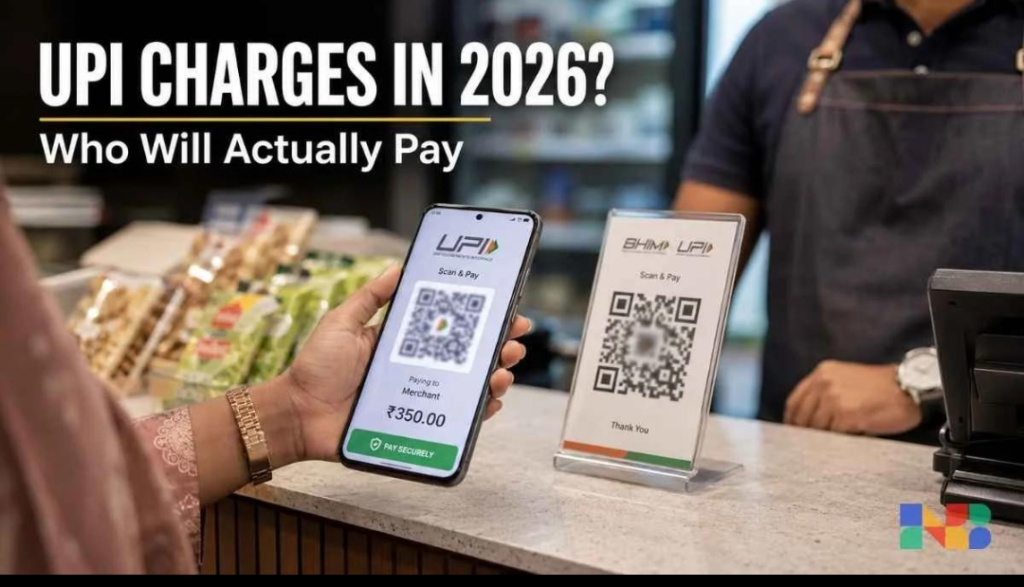
The Supreme Court of India on Monday (September 28, 2026) refused to stay the proposed Merchant Discount Rate (MDR) on specified Unified Payments Interface (UPI) person-to-merchant (P2M) transactions above ₹2,000. The new framework is scheduled to take effect from October 15, 2026.
A three-judge Bench comprising Chief Justice of India Surya Kant and Justices Joymalya Bagchi and V. Mohana was hearing a public interest litigation (PIL) filed by advocate Anjan Datta. The petition challenges the Union Finance Ministry’s notifications dated September 14 and 15 that introduced the MDR regime.
The Bench issued notices to the Centre, the Reserve Bank of India (RBI), the National Payments Corporation of India (NPCI), and the UPI & Services Steering Committee. It directed them to file counter-affidavits within four weeks explaining the legal and policy basis for the charges.
The court observed that the issue appeared “more technical than purely legal” and declined interim relief despite requests from the petitioner’s counsel.
Justice Joymalya Bagchi specifically questioned the nature of the levy:
If it is neither a tax nor a fee, what is the executive scope of making this expropriation? What is its character?”
Additional Solicitor General N. Venkataraman, appearing for the Centre, clarified that the MDR is “neither a tax nor a fee.” He described it as a settlement fee shared among banks, payment aggregators and other ecosystem participants to cover the cost of processing electronic transactions. The government, he stressed, does not receive any portion of the amount.
The PIL contends that the levy was introduced without adequate statutory safeguards, transparency, or public consultation. It questions the legal authority under the Payment and Settlement Systems Act and raises concerns that businesses may ultimately shift the cost to consumers, potentially pushing some users back toward cash transactions.
UPI has operated under a near-zero MDR regime for most merchant transactions since 2020, contributing significantly to India’s digital payments boom. The new framework ends that full free regime for higher-value commercial payments while protecting the vast majority of retail and small-value users.