
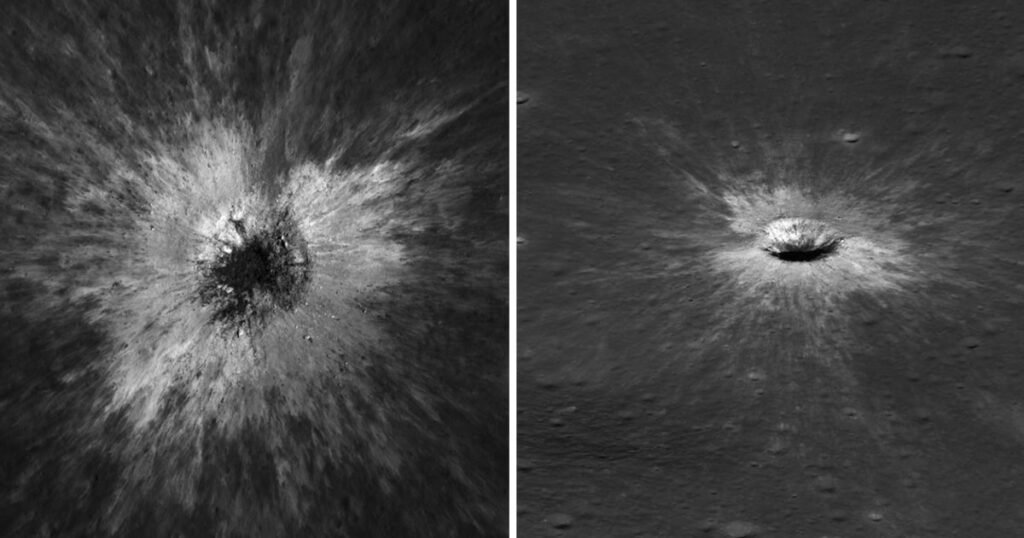
NASA scientists have identified a massive new impact crater on the Moon, created by a powerful collision in 2024. The crater measures approximately 728 feet (222 metres) across and up to 141 feet (43 metres) deep, making it larger than Rome’s Colosseum.
The discovery was made using NASA’s Lunar Reconnaissance Orbiter (LRO). The spacecraft captured images of the newly formed crater in May 2024, shortly after an incoming fragment believed to have come from an asteroid or comet struck the lunar surface. The event was not detected in real time by telescopes on Earth or in space.
Researchers later identified the crater in LRO data and conducted additional observations to confirm the discovery. The crater has been named after Thomas McGetchin, a former director of Houston’s Lunar and Planetary Institute.
Scientists estimate that an impact capable of creating a crater of this scale occurs roughly once every 132 years, making the event an unusually valuable opportunity to study how fresh impacts change the lunar surface.
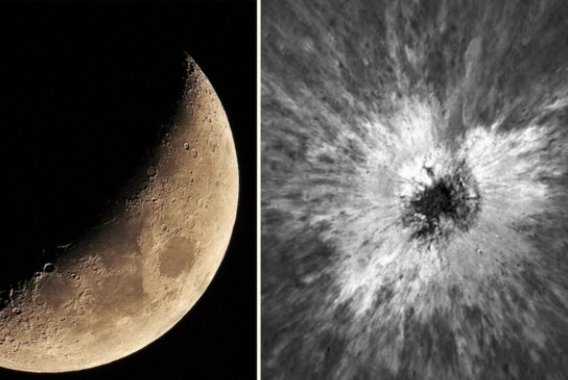
The collision also disturbed lunar soil across an area extending more than 100 kilometres. Researchers detected a cold region around the crater, providing additional information about how an impact can alter the Moon’s upper layer of soil.
The discovery could also be important for future lunar exploration. Scientists are studying how impacts distribute dust and debris across the surface, information that could help researchers understand potential risks for future spacecraft, equipment and planned lunar infrastructure.
Scientists study such lunar impact events to better understand how frequently asteroids and meteoroids strike the Moon and how these collisions shape its surface. Because the Moon has virtually no atmosphere to burn up incoming objects, even relatively small space rocks can reach its surface and create noticeable craters.
The discovery could also help researchers improve their understanding of the impact history of the Moon and refine models used to assess near-Earth objects. Lunar impact studies provide valuable information for planetary defense research and future space exploration.